Deck Resurfacing Cost: A Direct 2026 Pricing Guide
The short answer: resurfacing a deck costs most US homeowners about $3 to $20+ per square foot in 2026, which puts a typical 300–400 square foot project at roughly $1,500 to $12,000 depending on material, labor, and how much prep your old deck needs. National cost guides put the average resurfacing job on a 300-square-foot deck near $1,500, or $10–$55 per square foot depending on the material you choose. If the frame is sound and only the surface is failing, resurfacing is almost always the cheaper path — usually a fraction of the $6,000–$18,600 a full replacement of the same size runs.
This guide gives you the direct figures, the factors that move them, example budgets for common deck sizes, and the questions to verify before you sign anything.
Resurfacing replaces the surface, not the structure
Deck resurfacing means removing the old decking boards and installing a new walking surface over the existing frame. The joists, posts, and ledger stay in place. That is what separates it from refinishing, which sands and re-stains the boards you already have, and from structural repair, which fixes rotted joists, damaged posts, and compromised ledgers before any new board goes down.
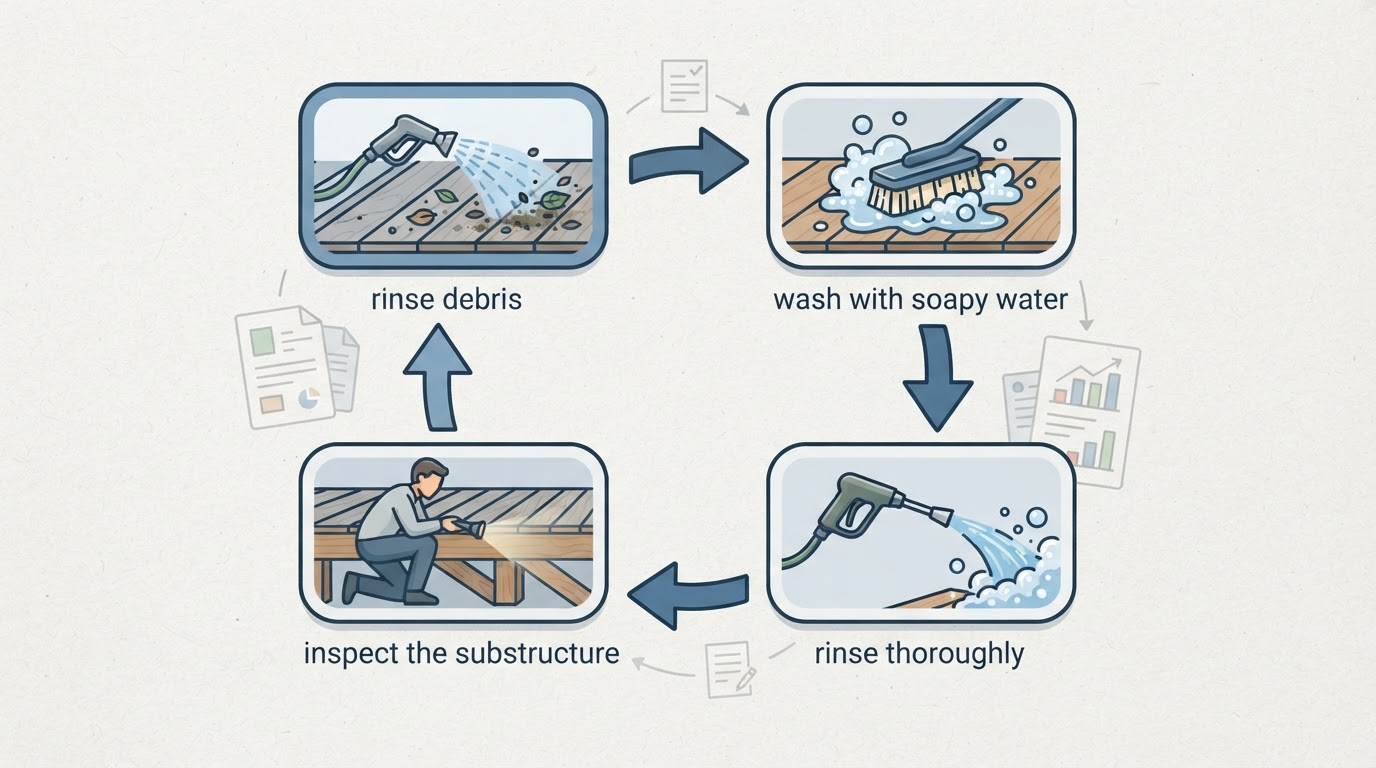
Resurfacing is the right call when the structure is sound but the surface is splintering, warped, or simply at the end of its life. If boards feel soft underfoot or the deck sways when you walk, stop and have the structure inspected first. No new surface fixes a bad frame.
What the 2026 cost guides say per square foot
A 2026 deck resurfacing cost guide from Legacy Exteriors publishes material and installed totals per square foot. These are planning ranges, not quotes: regional labor rates move them up or down.
Surface material | Material cost per sq ft | Total installed per sq ft |
|---|---|---|
Pressure-treated wood | $2–$5 | $4–$13 |
Composite, mid-tier | $4–$9 | $6–$17 |
Composite, premium | $8–$13 | $10–$21 |
Labor is the second half of the bill. The same guide puts deck resurfacing labor at $1.50–$4 per square foot nationally and $2–$8 per square foot in higher-cost markets, with a standard 300–400 square foot deck running $1,500–$6,000 in labor alone. Broader repair figures, compiled by Plank Compass from Fixr and HomeGuide figures, land in the same neighborhood: most homeowners pay about $1,500 to resurface a 300-square-foot deck, with a published range of $10–$55 per square foot as materials move from basic wood to premium boards.
Five factors that move your total
Deck size. Bigger decks cost more in total but usually less per square foot, because setup, travel, and tear-off are spread over more boards.
Material grade. This is the biggest lever you control. Stepping from pressure-treated wood to mid-tier composite adds roughly $2–$6 per square foot in material alone; premium composite adds more on top, in exchange for longer warranties and no staining.
Condition and prep. Lifted fasteners, warped boards, and soft spots mean extra prep time before new decking can go down. If rot shows up once boards are off, expect a change order for structural work.
Stairs, railings, and extras. These are usually quoted separately. Railings, stairs, fascia, and built-ins add thousands to a surface-only number, which is why two quotes for the "same" deck can look very different.
Access and permits. Tight side yards and multi-level decks slow the crew down. Permit fees are also commonly excluded from base resurfacing quotes, so ask explicitly.
Example budgets for common deck sizes
Multiply your square footage by the installed ranges above to build a baseline. Using the published ranges:
Deck size | Area | Wood installed | Mid-tier composite | Premium composite |
|---|---|---|---|---|
12×12 | 144 sq ft | $580–$1,900 | $860–$2,450 | $1,440–$3,000 |
16×16 | 256 sq ft | $1,020–$3,330 | $1,540–$4,350 | $2,560–$5,380 |
20×12 | 240 sq ft | $960–$3,120 | $1,440–$4,080 | $2,400–$5,040 |
24×12 | 288 sq ft | $1,150–$3,740 | $1,730–$4,900 | $2,880–$6,050 |
These are surface-only math. Add stairs, railing, demo, disposal, and structural repairs and real quotes run higher — premium composite projects on 300–400 square foot decks commonly land between $3,600 and $12,000 before extras, per the same published guide.
Resurfacing vs. replacement: the decision rule
Replacement numbers are the benchmark. Fixr figures compiled in the Plank Compass guide put a full 300-square-foot deck replacement at $6,000–$18,600 ($20–$62 per square foot), while HomeGuide lists replacement at $30–$55 per square foot. Resurfacing the same footprint typically runs a fraction of that.
Resurfacing is the right call when the structure is sound but the surface is failing. Choose replacement instead when the frame itself is failing, when more than half the boards need replacing anyway, or when you want a different size, layout, or material system than the current deck allows. When a repair estimate starts climbing toward the replacement figure, price both and compare.

A local pricing reality check: Deck Bros
Published national ranges only get you so far; local contractors set the real number. Deck Bros, a family-owned deck contractor licensed, bonded, and insured in Nebraska and Iowa, publishes its wood-decking installation pricing at $9.74–$12.43 per square foot and documents real project costs, including a 24×12 deck resurfaced in composite for $18,000 (TimberTech Antique Leather) and a 12×12 composite replacement at $16,000. Its team completes most installation jobs within a working day and gives same-day estimates over the phone, so you can get a local line-item number quickly rather than guessing from a national average.

Deck Repair landing page hero section showing repair services (stairs, railing, resurfacing, painting, staining) and call-to-action.
Build your baseline before you call
Start by measuring your deck. Multiply length by width for a simple rectangle. For L-shaped or multi-level decks, split the space into rectangles, calculate each section, and add them together.

Pick your material band. Choose wood or composite, then apply the installed per-square-foot range from the table above.
Add an extras allowance. Budget separately for stairs, railings, demo and disposal, and any structural repairs an inspection might reveal.
Write down your target range. You are done when you have a written low-to-high range for your deck size — that number is what you compare every quote against.
Questions to verify before you sign
- Is this a written, line-item quote? Materials, labor, prep, demo, and disposal should each have their own line.
- What exact material and grade are priced? "Composite" is not a quote. You want the brand and product line, because premium brands carry longer warranties.
- What is excluded? Ask specifically about permits, railings, stairs, structural repairs, and disposal fees.
- Was the structure inspected first? New boards over failing joists are money wasted. Confirm the contractor checks joists, posts, and the ledger before install.
- What is the timeline and payment schedule? Get start and completion dates and the payment milestones in writing.
- What warranty applies? Ask about the workmanship warranty and the manufacturer warranty on the boards themselves.
Bottom line
Deck resurfacing is a surface-level project with a structure-sized decision attached. Budget $3–$20+ per square foot installed, use your deck's real square footage to build a written target range, and compare quotes line by line against it. When the frame is sound, resurfacing delivers a like-new deck for a fraction of replacement cost — and the questions above are what separate a straight quote from one that hides its exclusions.