The Short Answer: Which Material Fits Which Homeowner
If you are replacing a tired deck and never want to think about staining again, composite is usually the easier material to live with. It costs more per square foot at the start, but it holds its color well, resists rot and insects, and does not need to be refinished on a schedule.
If your priority is the lowest possible upfront cost, or you want the natural grain and warmth of real wood, a wood deck still makes a lot of sense. Pressure-treated lumber is the budget option; cedar, redwood, and denser hardwoods cost more but look and feel richer underfoot.
The deciding question is not which material is "better" in the abstract. It is which one matches your budget now, your appetite for maintenance later, and the number of years you expect to live with the deck.

Choose wood if:
- Upfront cost is your tightest constraint.
- You like the look of real wood and do not mind refinishing it every few years.
- You are handy enough to handle small repairs yourself.
- You may sell the home before the maintenance cycle catches up with you.
Choose composite if:
- You have already spent years maintaining a wood deck and want to stop.
- You want consistent color and a surface with no boards to sand.
- You value longer manufacturer warranty coverage.
- You plan to stay in the home long enough to spread the higher upfront cost over many seasons.
A well-built deck lasts because of its framing, not just its surface. Boards are the part you see and replace, so the honest way to think about lifespan is to separate the structure from the decking: a sound frame can outlive two or three sets of boards, and the surface material decides how soon you refinish, repair, or replace them.
How This Comparison Works
This comparison is published by the team behind Deck Bros, a family-owned deck builder that installs both wood and composite decking. Deck Bros builds custom decks in wood and composite for Omaha-area homeowners, and the company reports that most of its projects are finished in about three days. Because the same crew works with both materials, the goal here is a straight read on the trade-offs rather than a push toward one option.
The criteria below are the ones that move the decision most: maintenance, feel underfoot and heat, appearance, upfront cost versus long-term value, and how to read a warranty. None of them produces a universal winner; a material that is wrong for one household is exactly right for another.
Prices and products change, so treat the specifics here as a framework rather than a shopping list. The goal is to give you the questions to ask and the trade-offs to weigh, not a single recommendation that ignores your yard, your budget, and how you actually use the space.
Maintenance and Upkeep
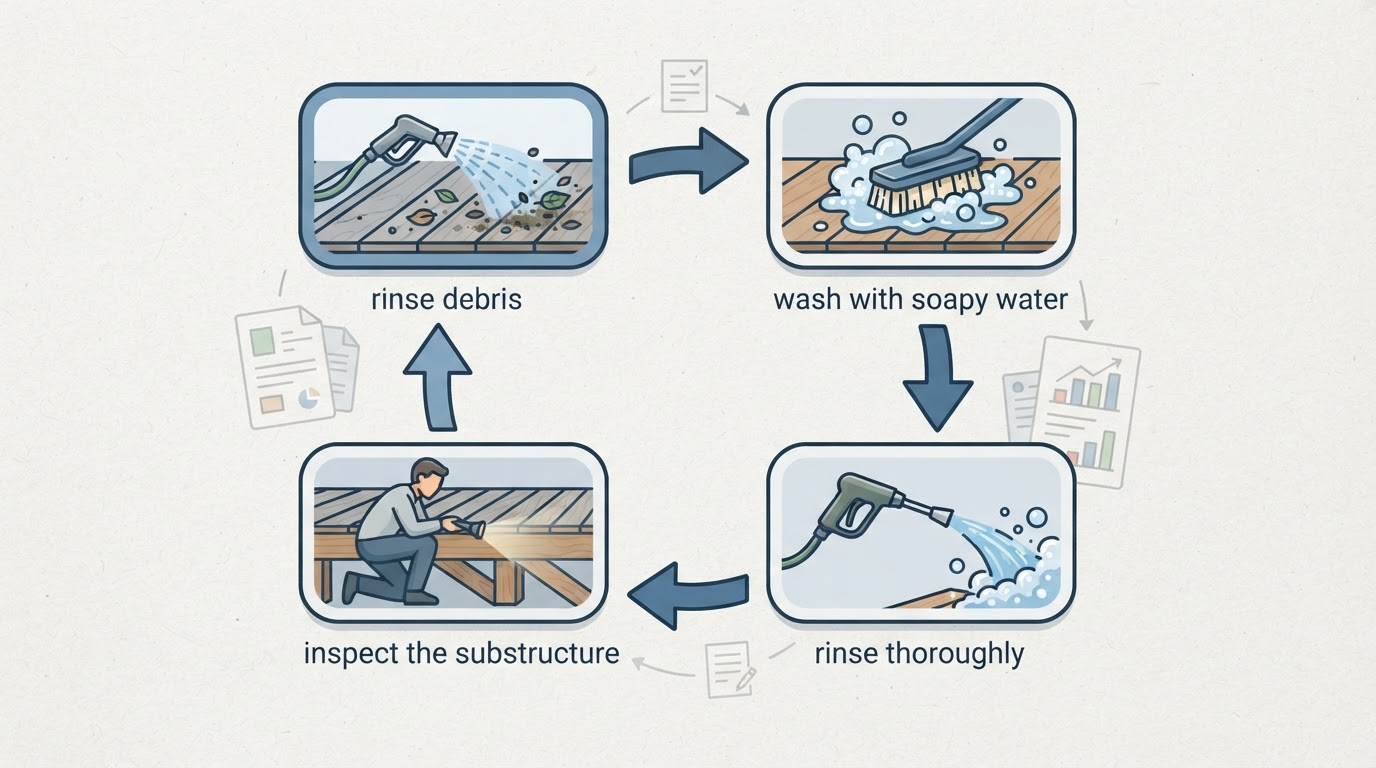
Wood is the more demanding material over time. Most wood decks need an annual or biennial cleaning, and a fresh coat of stain or sealer every few years depending on sun exposure and traffic. In a freeze-thaw climate like Nebraska's, water works into checks and gaps, expands when it freezes, and slowly opens the door to rot and loose fasteners. Spring is a good time to walk the deck, push on the railings, and look for soft or splintering boards.
Composite decking is engineered from wood fibers and plastic, and most boards need little more than soap, water, and a soft brush. There is no staining step and no sanding step, which is the main reason homeowners choose it. That does not make it maintenance-free. Grease from a grill, pollen, and dust still need to be cleaned, and darker colors show dust and footprints more readily than lighter ones.
Scratch resistance is closer than the marketing suggests. Composite boards resist splintering and hold their finish well, but heavy furniture, pet claws, and dropped tools can still leave marks. Wood can be sanded and re-stained to erase light damage, something most composite boards do not allow.
The practical difference is not only products. It is labor: wood asks for a few weekends of work and recurring supply costs, while composite asks mostly for periodic cleaning.

Feel Underfoot, Heat, and Traction
Wood generally stays cooler underfoot in direct summer sun, which matters on west- and south-facing decks. Composite absorbs more heat, especially dark colors in full sun; lighter colors, shade, and roof coverage all reduce the difference. If barefoot comfort is a priority, it is worth standing on samples in the sun before you choose a color.
Both materials can be slippery when wet, and both get slick in winter. Wood grain and brushed composite textures add grip, while capped boards in a smooth finish can feel slipperier. Wood can also splinter as it ages, while composite holds a smoother surface, which is one reason families with young children often lean toward it.
Appearance and Design Options
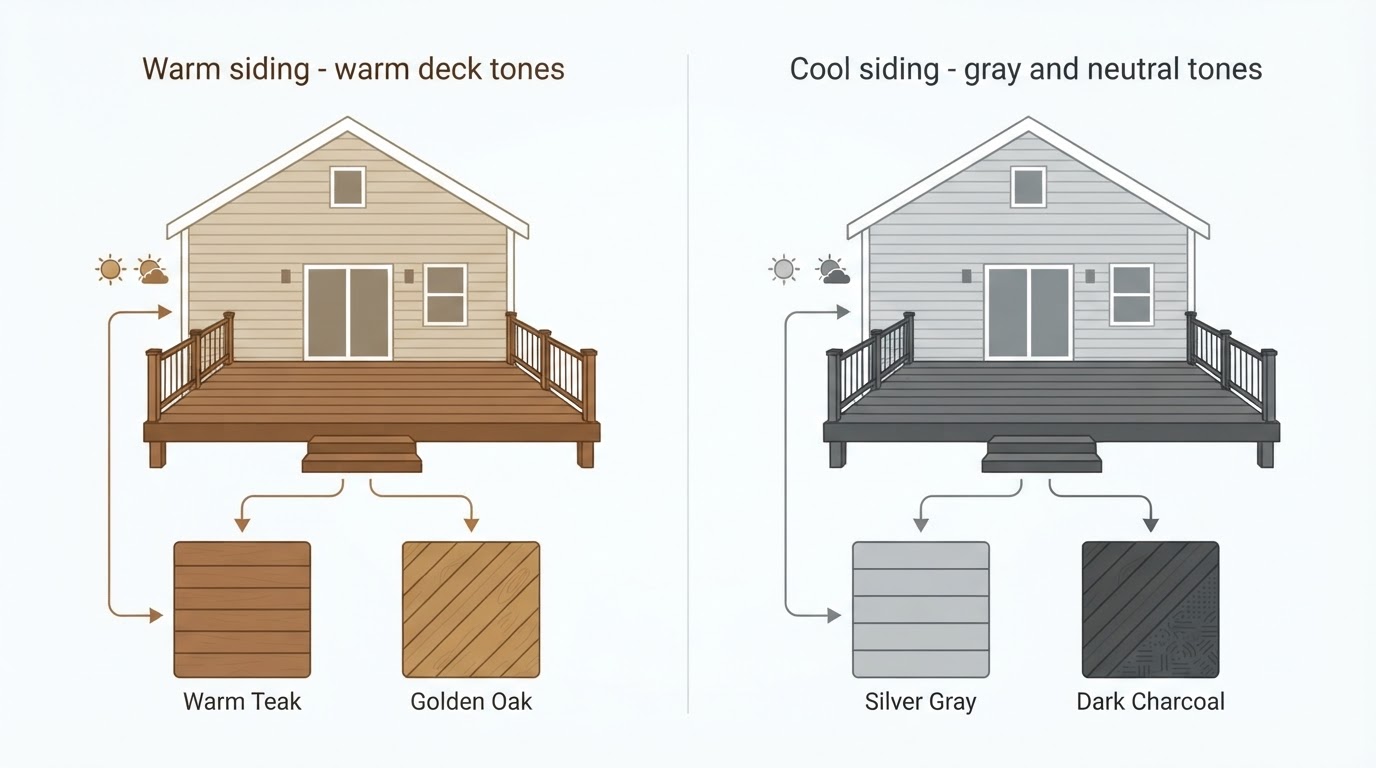
Wood decking looks like wood because it is wood: grain, knots, and slight board-to-board variation. Cedar weathers to a soft silver if left alone and can be stained to almost any tone; treated pine takes stain well but needs more prep. The trade-off is inconsistency, and the color you see on day one will not be the color you see in five years.
Composite decking offers repeatable color and a consistent finish from the first board to the last. Most lines include multi-tone boards that mimic wood grain, and capped boards are designed to resist staining and fading better than unsealed wood. Hidden fasteners keep the surface clean, and because boards are uniform, a repair is less likely to stand out. Appearance is subjective, but "consistent" and "natural" are the two honest words that separate the options.
Upfront Cost Versus Long-Term Value
Wood decking almost always wins on the initial quote. Pressure-treated lumber is the least expensive decking material, cedar and redwood sit in the middle, and premium hardwoods can approach composite prices. Composite decking costs more per square foot, and premium capped lines cost more still. The gap narrows over time: wood decks need stain, sealer, brushes, and either your weekends or a contractor's labor every few years, while composite decks avoid those recurring costs and their boards typically last longer before replacement.
Square footage and railing choices move the total more than most homeowners expect. For a sense of scale, Deck Bros publishes average project prices of about $14,000 for a 12×12 cedar deck and about $27,000 for a 20×12 composite deck with aluminum railings, fascia wrapping, and stairs. The footprints differ, so that pair is not a like-for-like comparison, but it shows how much size, stairs, and railing add to the final number.
How to Read Decking Warranties
Two different warranties usually apply to a new deck, and it helps to keep them separate. The manufacturer's warranty covers the boards and other materials. The workmanship warranty covers the installation. A long product warranty paired with a short labor warranty can still leave you paying for the fix.
When you compare terms, read for coverage rather than length. Ask what happens if boards fade, stain, crack, or rot; whether the warranty is prorated; whether it transfers if you sell the home; and what maintenance the manufacturer requires to keep coverage valid. Most product warranties exclude scratches from furniture and pets, damage from improper cleaning, and problems caused by installation errors. Registration and receipts are usually required, so keep both.
On the installation side, a workmanship warranty is only as good as the company behind it. Deck Bros states that every build it completes carries a five-year workmanship warranty, alongside limited-to-lifetime manufacturer warranties on the materials it installs. Whatever builder you choose, get the warranty terms in writing before work begins and confirm who pays labor if a claim is approved.
A Quick Decision Framework
What matters most | Wood decking | Composite decking |
|---|---|---|
Upfront cost | Lower | Higher |
Ongoing maintenance | Cleaning plus periodic staining and sealing | Cleaning only, no staining |
Feel and heat | Cooler underfoot, can splinter | Can get hot in full sun, splinter-free |
Appearance | Natural grain that weathers and changes | Consistent color with wood-look options |
Warranty coverage | Varies by species, often shorter terms | Often longer, limited-to-lifetime options |
Best fit | Budget-first, hands-on homeowners | Low-maintenance, long-horizon homeowners |
Next Step: Get Numbers for Your Own Deck
A comparison table can narrow the choice, but only a local quote can price your deck. Measure the footprint, count the stairs and railing runs, and take a few photos before you call anyone. Ask for a written estimate that separates materials from labor, request material samples you can stand on, and ask the warranty questions above before you sign.
Talk to a local builder about how each material behaves on your site, how the freeze-thaw cycle affects the framing you already have, and what maintenance the boards require in your yard's sun and shade. That conversation is usually the fastest way to turn a general comparison into a decision you can live with for the next twenty years.
Bring the estimate home, compare the line items, and decide which maintenance routine you are honestly willing to keep. The material that fits that answer is the right one for your deck.