What Actually Ends a Deck's Life
When a wood deck reaches the end, the cause is rarely just age. Boards soak up moisture, dry out, and soak up more. Freeze-thaw cycles pry at the grain, insects take advantage of softened fibers, and splinters and surface cracks make the deck hostile to bare feet. Then there is the upkeep most wood decks demand: cleaning, staining, sealing, and doing it all again a few seasons later.
Composite decking takes a different path. Instead of solid wood, these boards combine wood fiber with plastic, or use a plastic formulation through and through, so they do not rot or feed insects the way lumber does. That does not make them immune to time. It moves the question from "will it decay?" to "which parts of it will wear, and how quickly?"
In the Midwest, the wearing question matters more than the decay question. A deck around Omaha or Lincoln lives through humid summers, hard winter freezes, and repeated thaw cycles every spring. Two decks made from the same board can age differently a few miles apart, which is why the name on the sample alone never answers the question completely.

How to Tell Composite Materials Apart
The word "composite" covers several different constructions, and the differences show up in how long a deck holds its looks.
- Uncapped composite leaves the wood-fiber blend exposed on the surface. It is usually the more affordable option, but the surface is more porous, so stains, mildew, and fading have an easier path in.
- Capped composite wraps a composite core in a protective polymer shell. The shell is what resists stains, holds color, and carries most of the surface durability, so the quality of the cap matters as much as the core.
- PVC decking uses no wood fiber at all. It is plastic through the board, which makes it a strong choice where moisture is the main enemy.
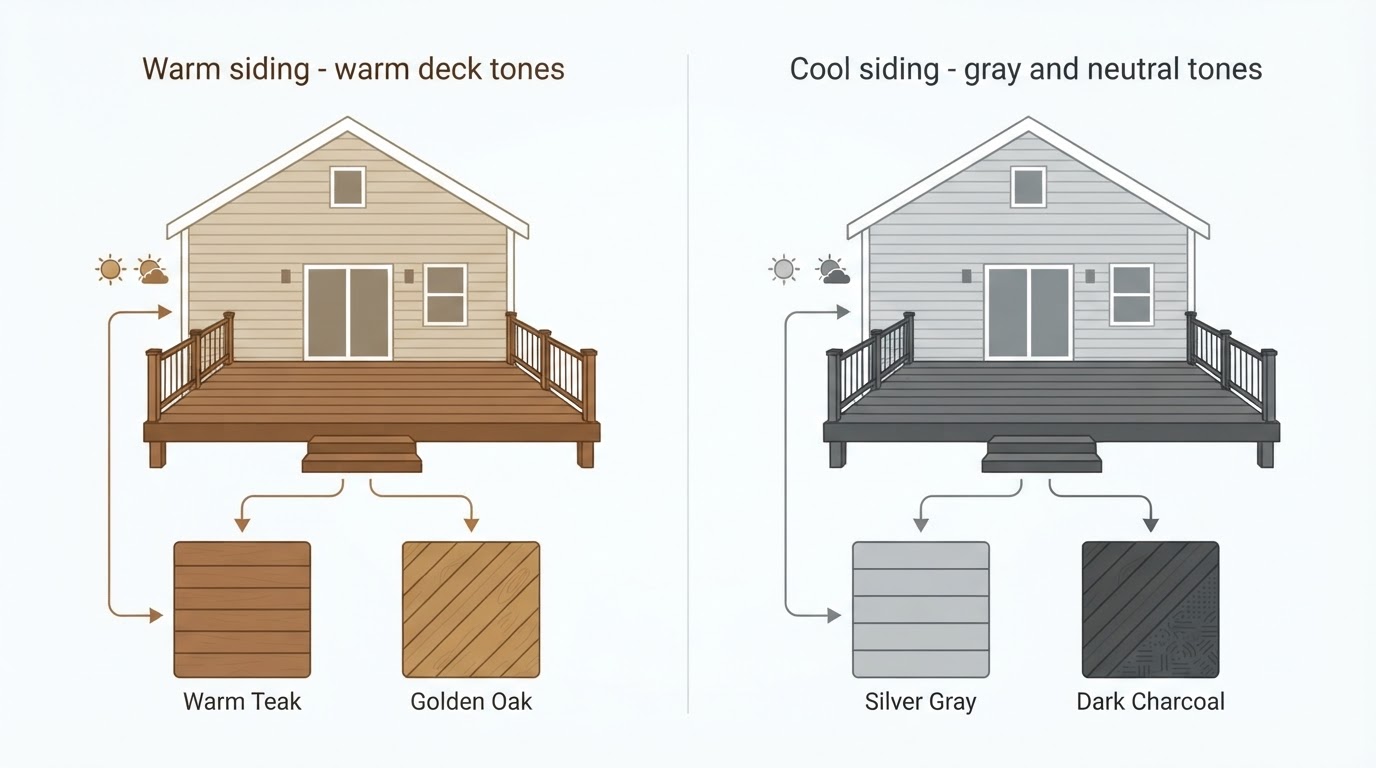
Beyond the family name, compare the version you are actually quoted. Wood-grain embossing and color depth vary from board to board, and color can shift as a deck weathers. Ask to see a sample that has sat outside, not just a showroom piece kept under a roof.
Two practical checks are worth doing before you commit: stand barefoot on a board left in the sun, and drag a key or a coin across a scrap piece to see how the surface responds to a scratch. Heat and scratch resistance are the two traits homeowners tend to discover after the deck is built, when changing their mind is expensive.
What Shortens a Composite Deck's Life
Most of the years lost to a composite deck come from a handful of ordinary pressures.

Sun and heat. Ultraviolet light fades color and dries the surface over time. Full-day exposure is harder on a deck than a shaded yard, and boards in direct sun can become uncomfortable underfoot.
Freeze-thaw and moisture. Water that sits on a deck or under it is the long-term threat. Snow piled against the railing, ice in the gaps, and poor airflow beneath the boards keep moisture where it does the most damage.
Tools and traffic. Metal shovels scrape the surface. A grill placed close to the deck can leave a heat mark. Furniture dragged across boards, pet claws, and dropped tools all leave their own history. A plastic shovel, a grill mat, and felt pads on furniture legs are cheap protection.
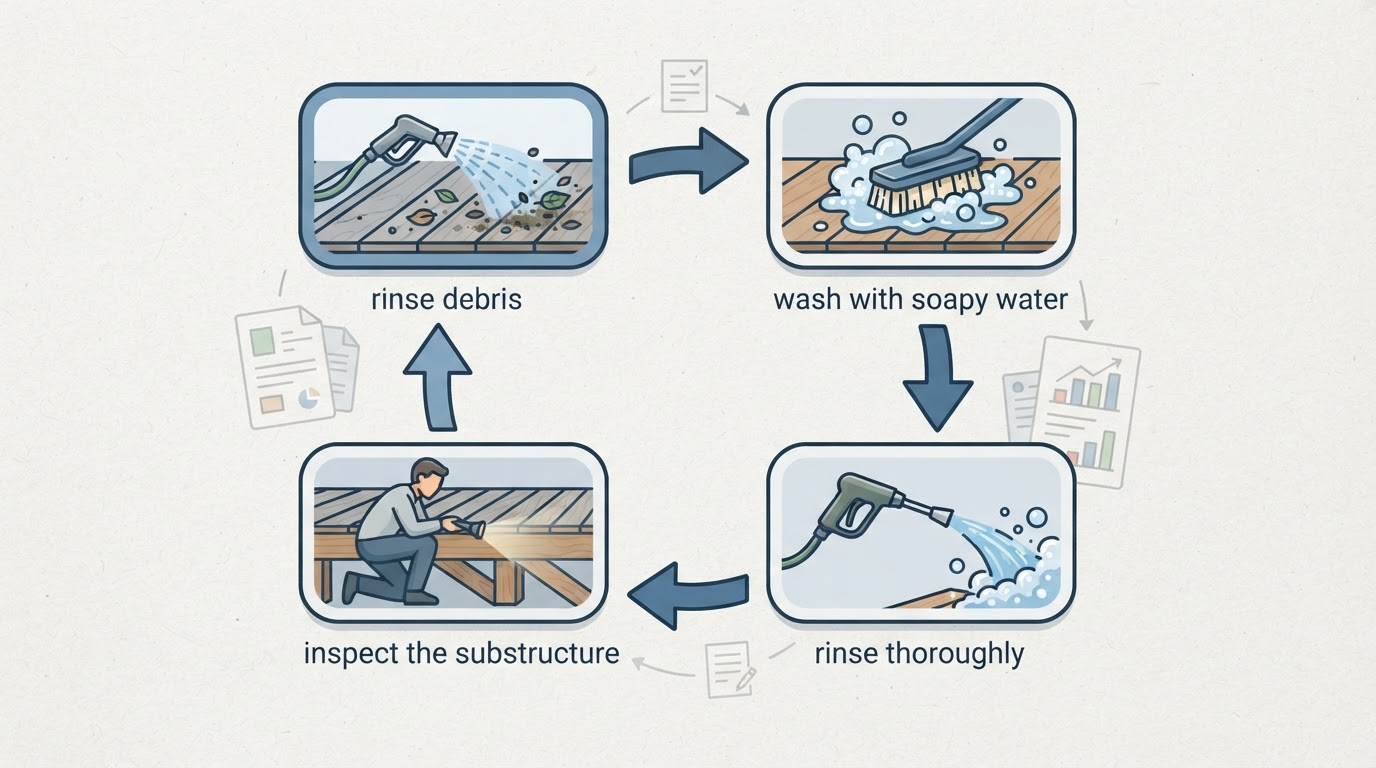
Dirt and organic buildup. Pollen, leaves, and dirt hold moisture against the surface, and mildew can stain even boards that never rot. A routine rinse and a soft brush with a cleaner approved by the manufacturer handle most of it. Abrasive pads and harsh chemicals can dull the surface or affect finish coverage.
Installation quality. A board only performs as well as the frame beneath it. Proper joist spacing, fastening, and ventilation are what keep boards flat and dry, and they are hard to inspect or fix after the deck is built.
How to Read a Warranty Before You Trust It
A long warranty number is not the same thing as a long life. It is a contract with conditions, and reading it carefully tells you more about expected service life than the line on the box.
Start with what is covered. Most composite warranties separate the board itself from the labor to replace it. A product warranty replaces material; it rarely covers the cost of tearing out and rebuilding. That gap is where homeowners get surprised.
Then check the fine print on four points:
- Length and structure. Some coverage stays full for the entire term; other warranties taper or prorate after a set number of years, which reduces what you actually receive.
- What conditions are named. Fade, stains, structural failure, and surface defects may each have their own coverage, limits, and exclusions.
- Transferability. If you sell the house, can the next owner claim the warranty? Transferable coverage protects resale value.
- Requirements. Registration deadlines, approved cleaning products, installation by a qualified contractor, and receipts are common conditions. Missing one can turn a covered problem into your problem.
Ask for the actual warranty document before you sign, not a brochure summary. Then ask who handles a claim, how a replacement board gets matched to your faded deck, and how long a repair usually takes.
When to Bring In a Local Deck Builder
Every factor above is site-specific. The frame under your existing deck, the sun your yard gets, how snow drifts against the railing, and where water drains are details a walkthrough can read in person and a web page cannot.
Deck Bros is a family-owned residential deck contractor serving the Omaha metro, Lincoln and nearby Nebraska towns, and Western Iowa. The company builds custom wood and composite decks, installs new decking over existing structures, repairs worn decks, and provides end-to-end in-home design consultations. That last part is where a conversation about lifespan gets practical: a builder who walks the site can tell you which material family fits your frame, exposure, and plans, instead of leaving you to decode specifications on your own.

Deck Design landing featuring in-home design consultation, material samples, accessibility-conscious design options. Useful for deck design process articles.
The company's own composite offering is a useful example of how the warranty question plays out. Deck Bros installs composite systems from brands including TimberTech, Trex, and Fiberon, and describes its composite coverage as a 25-year product warranty, with an additional five to seven years of replacement labor coverage through its TimberTech Platinum contractor status. Those terms are the company's description, and the details belong in the written warranty, so read it closely. But they show the difference between coverage that replaces boards and coverage that pays to put them back.
Questions Worth Asking Before You Commit
Whichever way you lean, a short conversation with specific questions gets you further than another round of comparing brochures:
- Which material family is this quote for: uncapped, capped, or PVC?
- What exactly does the warranty cover, and what does it exclude?
- Is labor covered for a replacement, and for how long?
- What maintenance does the manufacturer require, and which products are approved?
- How will the frame, fastening, and ventilation be handled?
- Who registers the warranty, and what paperwork will you receive?
- How will a replacement board be matched to the deck years from now?
Take notes on the answers and ask for them in writing. A builder who answers plainly, including about limitations, is giving you a preview of how they will handle a problem later.
The honest answer to how long composite decking lasts is that the material sets the ceiling and everything around it decides how close you get. Choose the board for your exposure, build it on a sound frame, keep it clean, and treat the warranty as part of the product. That is what turns an estimate into a deck you can stop worrying about.