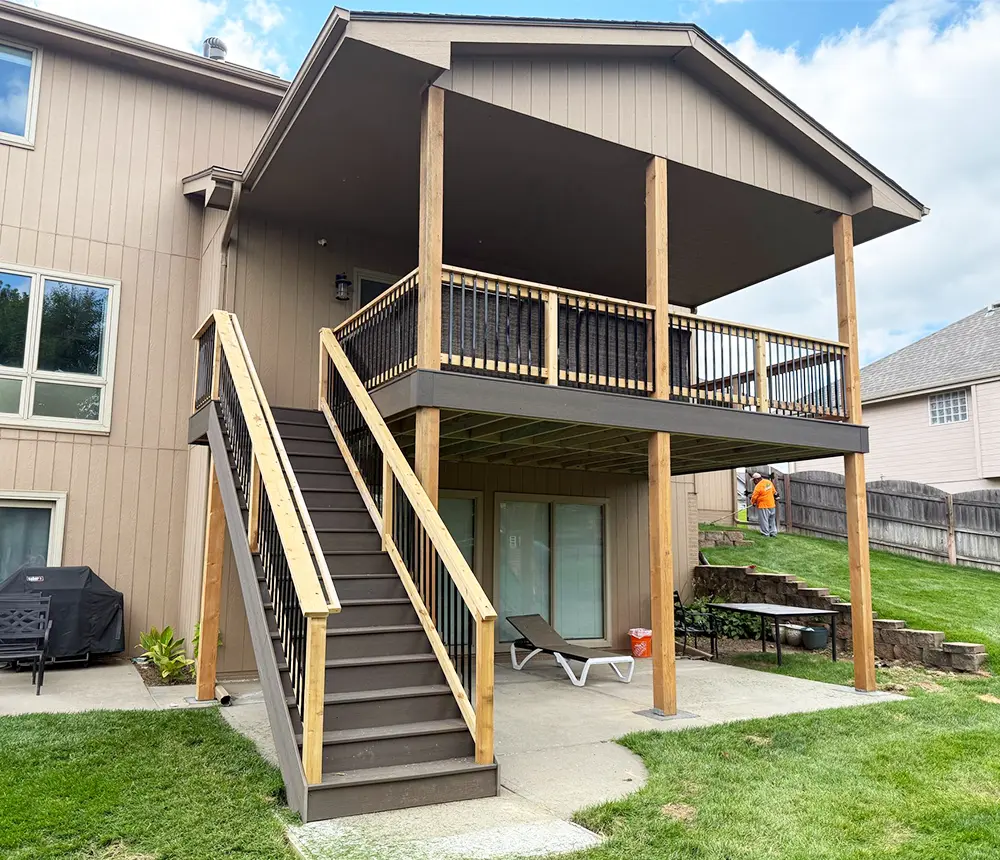
A finished composite deck built by Deck Bros in Omaha
Editorial Guide

Low Maintenance Deck Options:
What Each Material Actually Requires

Every deck needs some upkeep—but how much varies enormously depending on what it's built from. This guide cuts through the marketing language and shows you exactly what each material demands week to week and year to year.

What "Low Maintenance" Actually Means for a Deck

A deck with zero maintenance doesn't exist. What separates low-maintenance materials from high-maintenance ones is the type of work required and how often you have to do it.

High-maintenance decks need annual or biennial treatments—staining, sealing, sanding, or painting—to protect the wood from moisture, UV, and rot. Skip those treatments and the deck degrades visibly within a season or two.

Low-maintenance decks still need cleaning and periodic inspection, but they don't need yearly chemical treatments to preserve their structure or color. The tradeoff is usually a higher upfront cost in exchange for fewer recurring hours and expenses.

Maintenance Task Comparison

TaskHigh-Maint.Low-Maint.
Annual StainingRequiredNot Required
Sanding BoardsEvery 1–2 yrNot Required
Cleaning1–2× per yr1–2× per yr
InspectingAnnuallyAnnually
Board ReplaceCommonRare

*Note: Maintenance frequency varies by climate and sun exposure.

The Four Most Common Decking Materials

Most homeowners land on one of these four categories. Here's what each one demands in practice.

Pressure-Treated Pine

Affordable but vulnerable. Requires sanding and staining every 1-2 years to prevent UV damage and splinters.

Annual cleaning
Sand & Stain (1-2yr)
Scenario

Lowest upfront budget; happy with annual labor.

Cedar

Natural rot resistance. Stays stable but grays without UV-blocking sealer every 1-2 years.

Natural silver-gray look
Soft-grain cleaning
Scenario

Premium wood look; moderate durability.

Composite Decking

Recycled plastic + wood fiber blend. Never needs staining or sanding. Just a rinse twice a year.

No staining/sanding
Stain resistant
Scenario

Eliminate chemical treatments entirely.

PVC Decking

100% plastic. Immune to rot and insects. The absolute minimum moisture-related upkeep.

Immune to moisture
Zero wood fiber
Scenario

Maximum longevity; highest upfront cost.

Side-by-Side Maintenance Comparison

Here's how the four materials stack up on the tasks that take the most time and money over a deck's life.

FeaturePineCedarCompositePVC
Annual StainingRequiredRequiredNot requiredNot required
Cleaning Freq.1–2× / yr1–2× / yr1–2× / yr1–2× / yr
Sanding1–2 yrOccasionallyNot requiredNot required
Rot RiskModerateLow–ModLow (subframe)Minimal
Splinter RiskYesLowNoNo
Color StabilityFadesGraysHolds wellHolds well
Upfront CostLowestModerateMod–HighHigh

*Table note: Cost ranges vary by region, material grade, and installation complexity. Contact local pros for accurate Omaha quotes.

Maintenance That Every Deck Needs, Regardless of Material

Choosing a low-maintenance decking surface doesn't eliminate all deck upkeep—it just shifts where your time goes. These tasks apply to every deck regardless of what the boards are made of.

Substructure

Inspect joists and beams for rot annually. They are often wood even if surface is composite.

Ledger Board

Check flashing where deck attaches to the house. Deteriorated flashing causes water damage.

Fasteners

Tighten loose screws and check railings for flex. Safety items must be solid.

Debris

Clear organic matter from board gaps to prevent moisture traps and mold.

If You Want to Spend Less Time on Upkeep, Here's Where Composite Fits In

If the annual staining, sanding, and sealing cycle of wood decking is what you're trying to avoid, composite decking is the most widely available path to eliminating it. You still clean the deck—usually twice a year with basic soap and water—but you drop the chemical treatment calendar entirely.

For homeowners in the Omaha area, Deck Bros installs composite decking as part of their standard deck building service. They work with composite products and can walk you through the material options that fit your budget, aesthetic, and use patterns.

Thinking about a low-maintenance composite build in Omaha? Get Your Free Quote from Deck Bros.

Ready to Build a Deck That Works for Your Life?

Deck Bros builds composite and wood decks in Omaha and surrounding areas, completing most builds in just 3 days.

Get Your Free Quote

4.9/5 from 550+ reviews · 2,500+ decks built · 5-year workmanship warranty

Frequently Asked Questions

What is the lowest-maintenance decking material?

PVC and capped composite are the lowest-maintenance options. Neither requires staining or sanding. PVC is immune to rot as it contains no wood fiber.

Do composite decks need any maintenance at all?

Yes. They require regular cleaning (1–2x per year) to prevent stains from organic debris like wet leaves or grease.

How often does a pressure-treated deck need to be stained?

Typically every 1–2 years, depending on sun exposure and climate.

Is cedar a low-maintenance wood deck option?

It is more rot-resistant than pine, but still requires staining every 1–2 years to maintain its color.

How long does a composite deck last compared to wood?

Composite is designed for high longevity with warranties covering fading and staining, whereas wood lifespan depends heavily on consistent manual care.

What's the most important maintenance task for any deck?

Inspecting the substructure every year. Most failures are structural, occurring in the wood frame beneath the surface.