Start With the Part Most Comparison Pages Skip
Disclosure: This comparison is published by Deck Bros, a family-owned deck builder serving the Omaha metro, Lincoln, and nearby Nebraska and Western Iowa communities.

Deck Bros product interface.
Search for TimberTech vs Trex and you will find plenty of scorecards: one brand wins on heat, the other wins on color, and a comment section argues about both. Those verdicts rarely survive contact with a real project, because each manufacturer sells several product series, and the series — not the logo — determines the texture, the color options, the price band, and the warranty terms.
That is why the useful comparison is not "which brand is better." It is "which specific board will be installed on my frame, what does its warranty document actually say, and who is responsible for labor if something fails." The rest of this guide is built around those three questions.
Where TimberTech and Trex Are Genuinely Similar
Before the differences, it helps to see how much the two brands share.
Both companies make capped composite decking, a composite core wrapped in a protective polymer cap. That construction is what made composite decks a low-maintenance alternative to wood. Both brands offer more than one capped line at different price points, both publish limited manufacturer warranties that vary by line rather than one blanket term, and both rely on hidden fastener systems and the same general installation rules.
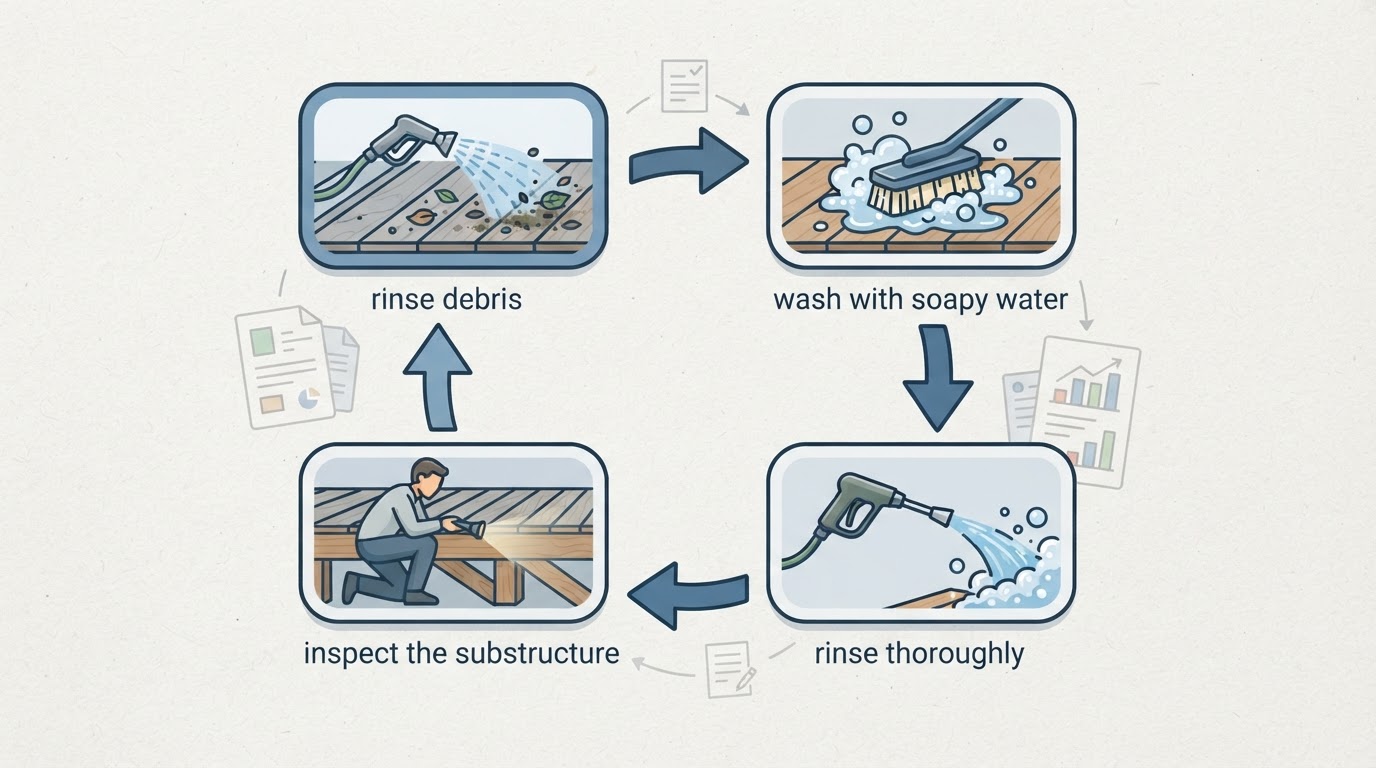
Neither brand needs the annual staining and sealing that bare wood demands, but neither is maintenance-free. Pollen, dirt, tree sap, and grill grease still need to be cleaned, and shaded boards can grow mildew or algae over time. On both brands, how you clean — and what you clean with — can affect coverage, which is why the warranty document, not the showroom pitch, is the reference to keep.
The Six Criteria That Actually Separate the Two Brands
Lineups and warranty terms change, so no brand-level scorecard stays accurate for long. Use the same six criteria on whatever series each brand quotes you, and let the answers decide.

1. Lifespan and what the warranty really covers
Composite boards are commonly marketed with product warranties measured in decades, but the headline number is the least useful part of the document. What matters is which failures are covered — fading, staining, structural breakage, insect damage — who pays for the replacement board, and who pays the labor to install it. Ask for the warranty PDF for the exact collection and color you are buying, not a general brochure, then read the exclusions. Improper installation, the wrong fasteners, and certain cleaning products are common ways coverage is lost.
Installer certification can change this answer. Deck Bros, for example, states that composite decking it installs carries a 25-year product warranty and that its TimberTech Platinum status adds 5–7 years of replacement labor coverage on top of it. If labor is the expensive half of a claim, that coverage is worth more than another year of product term.
2. Upkeep and staining
Both brands sell capped boards designed so that spills and most stains wipe off, and neither requires annual staining. The practical differences show up in the details: how the surface texture traps dirt, how light colors hide pollen, how dark colors show footprints and dust, and how each finish handles grease, rust, and fertilizer stains that warranties often exclude.
Ask which cleaning products keep the warranty valid, and ask what happens if a stain does not come out. A board that is easy to clean in year one and impossible to clean in year eight is a maintenance problem no warranty term will fix.
3. Heat in direct sun
Surface temperature is one of the most common complaints about composite decking, and it depends on color, cap formulation, and sun exposure as much as on the brand. A light color in one series can stay noticeably more comfortable than a dark color in another, and a full-sun western exposure is a different job from a shaded, north-facing deck.
Ask to see samples in the afternoon sun, ask how the specific series performs on heat, and consider layout decisions — shade structures, a pergola, or a covered deck — if the space is used barefoot in summer.

4. Scratch, scuff, and pet resistance
Capped boards hold up better than bare or early-generation composites, but surface texture still varies. Deeper, wire-brushed grains can hide everyday scuffs better than smooth or lightly embossed finishes, and some finishes show scratches more readily. Because scratches and abrasions are often excluded or limited in warranty documents, this is a feel-and-ask criterion, not a spec-sheet one. Ask the contractor how the finish in each series has held up on local projects and what the remedy is if you are not satisfied.
5. Finish, texture, and color options
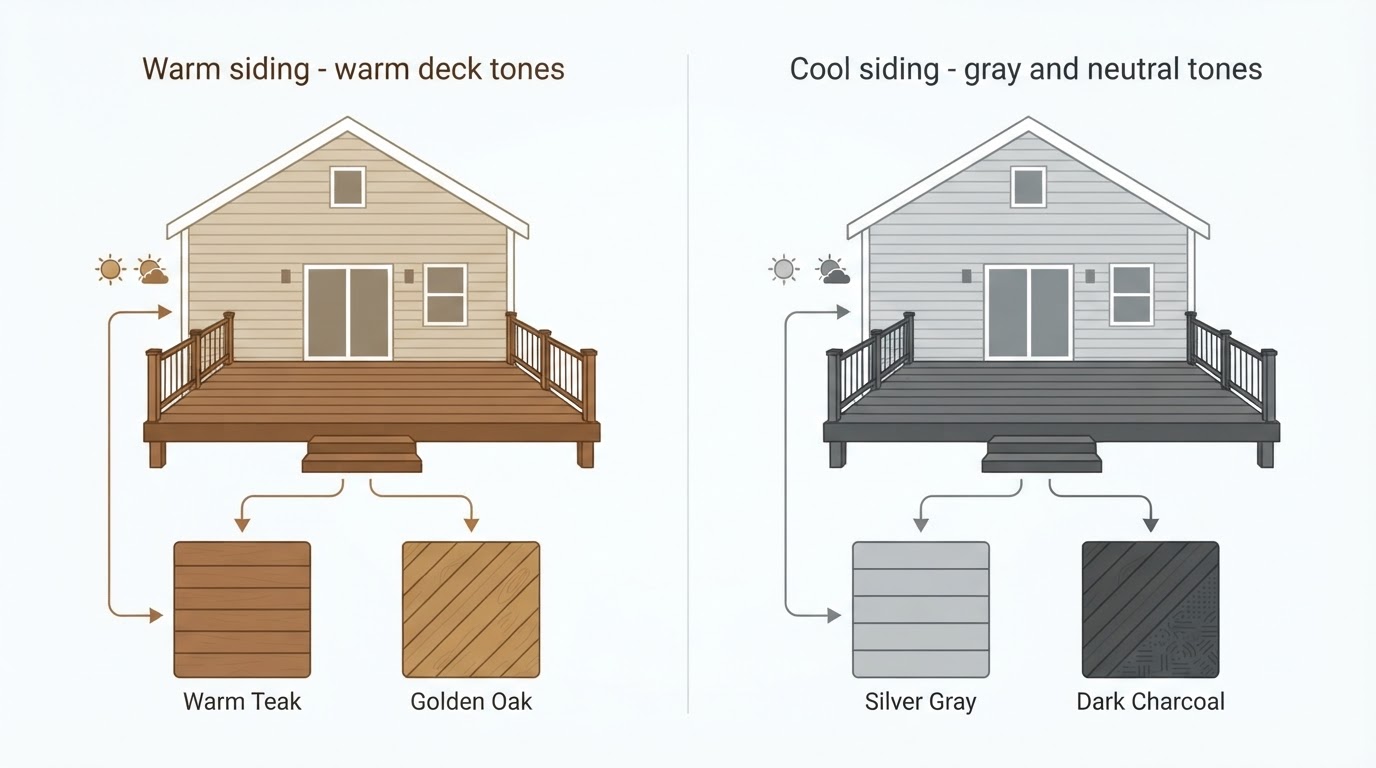
Both brands offer several color families, from pale grays and warm browns to multi-tone boards with streaked grain. What matters on a finished deck is how strongly the board is variegated, whether fascia and trim are available in a matching color, whether the railing coordinates, and how the color reads against the house.
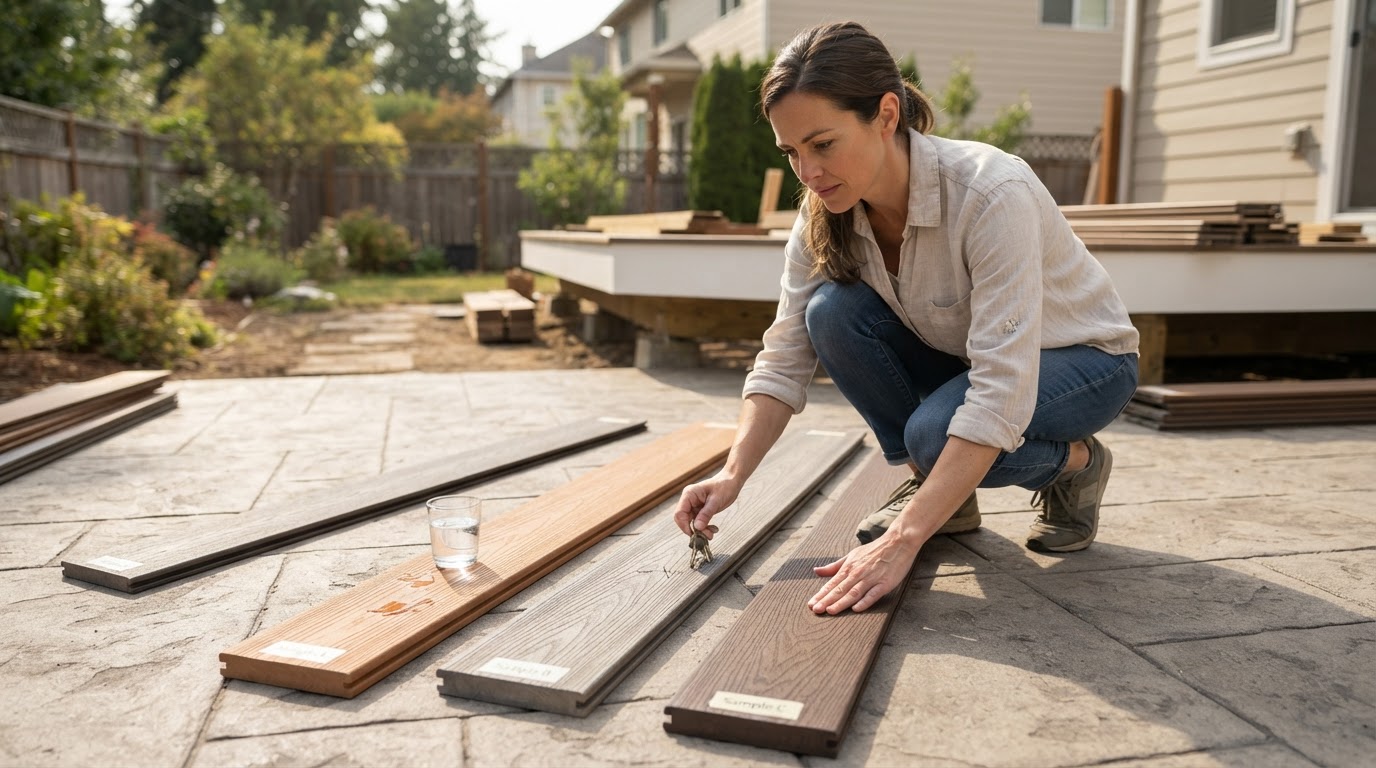
A board can look completely different in a showroom than it does in bright outdoor light. Compare physical samples outdoors at your home, at the time of day you use the deck most, before you commit to a color.
6. Installation requirements and who installs it
Every series has its own installation requirements: joist spacing, fastener clips, gapping for drainage and expansion, stair and railing details. Those rules come from the manufacturer, and skipping them is one of the fastest ways to void a warranty, no matter which brand is on the board.
This is also the criterion where the installer matters as much as the material. Ask whether the contractor is certified by the brand you choose, what that certification includes, and how warranty claims are handled after the crew leaves. A certified installer can explain the coverage chain in writing; an uncertified one may leave you holding a product warranty with no labor coverage behind it.
Who Each Brand Suits
Neither brand is a universal winner, and any comparison that crowns one has probably skipped the series question. In practice, each brand fits a homeowner's priorities in a slightly different way.
TimberTech's lineup spans several capped composite series, and the color, texture, and warranty terms change from one series to the next, so the specific board in your quote matters more than the name on the sample rack. Trex likewise offers multiple capped composite series with their own palettes and warranty documents, so the same discipline applies: compare the exact board and its written coverage, not the brand alone.
From there, match the brand to the priority that matters most to you:
- If the warranty chain is your priority, pick the series whose document includes replacement labor, and pick an installer whose certification supports that coverage. A product warranty without labor coverage can still leave you paying for the expensive half of a claim.
- If a specific look is your priority, let the physical sample decide. Colors, variegation, and grain textures differ more between series than between brands.
- If heat is your priority, compare the lightest boards in each series under your own afternoon sun, then plan shade for the rest of the deck.
- If budget is your priority, compare quotes for the same deck size, framing, railing, and features — and ask each quote to name the exact series and color so the numbers are comparable.
- If you are resurfacing an existing frame, have the structure inspected first. Joist condition and spacing decide what can be installed, and no board choice fixes a frame that is not ready.
A brand only suits you when its specific series, in your color, installed by your contractor, meets the criteria above. That is the comparison worth making.
What to Verify in Writing Before You Commit
A verbal comparison is not a plan. Ask for these in writing before you sign:
What to verify | Why it matters | Where to confirm it |
|---|---|---|
Exact series, collection, and color | Same brand, different series means different texture and warranty | Quote line item |
Warranty document for that series | Terms, exclusions, and covered failures vary by line | Manufacturer's PDF |
Labor coverage | A product-only warranty can leave you paying for installation | Written quote or contract |
Fastener system and joist spacing | Wrong installation voids coverage | Installer's written scope |
Cleaning and care requirements | The wrong cleaner can void finish coverage | Manufacturer care guide |
Itemized project quote | Demo, disposal, framing repair, permits, and taxes change the total | Written quote |
If a contractor cannot produce the series-specific warranty document before you sign, that is useful information about how a future claim will go.
A Local Next Step for Omaha-Area Homeowners
Deck Bros is a certified TimberTech Platinum Contractor that installs composite decking from both TimberTech and Trex, so homeowners comparing the two can see the same project quoted both ways and have the warranty terms explained before they commit. The company states that the composite decking it installs carries a 25-year product warranty, with its Platinum status adding 5–7 years of replacement labor coverage.
If you are replacing an aging wood deck, the next step is an in-home design consultation: look at the boards, compare finishes in person, and get your warranty questions answered in writing before you sign anything.