This guide is published by the team behind Deck Bros, a family-owned deck contractor serving the Omaha metro and western Iowa, so we have a commercial interest in deck replacement work.
When a Deck Replacement Makes More Sense Than a Repair
Start with the structure, not the surface. Deck boards, stairs, and railings can be refreshed while the frame underneath keeps doing its job. Once the frame is compromised, replacing boards only postpones a larger bill.
Use these criteria as a first filter:
- Soft, cracked, or crumbly wood at the ledger board, rim joist, or post bases usually means water has reached the structure.
- Footings that have heaved, settled, or pulled away from the posts are a structural problem, not a cosmetic one.
- A deck that sways, bounces, or has railings you can move by hand needs a safety assessment before anyone stands on it.
- Rot that reaches across multiple boards, joists, and stringers is rarely worth patching piece by piece.
- A surface that has already been refinished several times and still looks tired is often closer to the end of its service life than the owner expects.
Repair stays rational when the damage is limited to the walking surface. Isolated rotten boards, a loose railing section, worn stairs, and faded stain are all fixable when the joists are solid, the fasteners are tight, and the posts are stable. A professional assessment is the cheapest way to find out which category your deck is in, because the difference between the two answers decides the budget.

Deck Repair landing page hero section showing repair services (stairs, railing, resurfacing, painting, staining) and call-to-action.
What a Tear-Out and Replace Project Involves
A full deck replacement is a sequence, and each step carries its own cost driver.

- Assessment and measurement. The contractor measures the deck, checks its height above grade, looks at access for equipment and materials, and examines the frame, footing depth, and how the deck attaches to the house.
- Permits and approvals. Most jurisdictions require a permit for structural deck work, and many homeowner associations review material and railing choices. Ask who files the paperwork and who pays the fee.
- Demolition and disposal. Old decking, railings, stairs, and damaged framing come out, and the debris leaves in a dumpster. Disposal fees, haul distance, and whether the old material can be recycled all move the total.
- Framing and footing work. Demolition exposes what an inspection cannot see. Rotted joists, a failing ledger board, or shallow footings found mid-project are the most common reasons a quote changes after work begins.
- New decking, railing, and stairs. Material choice, board orientation, picture-frame borders, hidden fasteners, and railing systems change both the material bill and the labor hours.
- Final inspection and punch list. The permit needs to be closed out, and loose boards, wobbly railings, or drainage problems should be corrected before the final payment.

Scope is what separates a resurface from a rebuild. Deck Bros installs new decking on existing structures, including resurfacing, new stairs, blocking, and joist reinforcement, and reports that most of those jobs are completed within a working day, against roughly three days for a from-ground-up build. When the frame is sound, that distinction is the difference between a short project and a full reconstruction.
Deck Replacement Cost Benchmarks
Published numbers are useful only when you know what they cover. Compare benchmarks by scope, not by the lowest figure on the page.
Deck Bros, a family-owned contractor, publishes its own install pricing—$9.74–$12.43 per square foot for wood decking—alongside documented replacement case studies at $16,000, $18,000, and $65,500.
- Per-square-foot decking pricing. The published $9.74–$12.43 per square foot range covers installing wood decking on an existing structure. It does not include tearing out and disposing of an old deck or rebuilding the frame.
- Composite replacement. A documented 12×12 composite replacement came in at $16,000, and a complete elevated replacement reached $65,500.
- Resurfacing. A 24×12 resurface is documented at $18,000, which shows what a larger project costs when the existing frame is reused rather than rebuilt.
- A worked example. One published pricing example lists a 20×16 composite replacement with Fiberon Sanctuary decking and Westbury railing at $44,426.
The pattern behind those numbers is consistent: demolition, disposal, framing repair, height, access, and railing selection move the price more than the board surface does. A quote that lists only decking material per square foot is not comparable to one that itemizes the tear-out.

Mid-page pricing section with real case study: composite deck replacement at $44,426 (20x16x5, Fiberon Sanctuary, Westbury railing). Ideal for composite vs wood cost articles.
Wood or Composite: Where the Delta Comes From
Wood and composite rarely differ in square footage. They differ in what you pay for and when you pay for it. Work through these criteria before choosing a surface:
- Upfront material cost. Composite boards generally carry a higher material price than pressure-treated wood, so the same footprint usually costs more before labor is added.
- Maintenance commitment. Ask how often the surface will need cleaning, sanding, or refinishing, and who is expected to do that work over the life of the deck.
- Warranty coverage. Compare the manufacturer's warranty term and what it actually protects—boards, finish, structure, or labor.
- Climate behavior. Freeze-thaw cycles, sun exposure, and shade affect how any surface ages, so ask how each option has performed on local projects.
- Structural effect. The decking material can influence joist spacing, fastener choice, and footing loads, so the structural plan should be settled before the surface is chosen.
The wood-versus-composite trade-off is easier to judge once the structural scope is fixed. Frame repairs, height, and access can outweigh the material delta on the same footprint.
Who Does the Work: Three Routes To Compare
Replacement work reaches a homeowner through one of three routes, and the right choice depends less on the headline price than on who owns the risk.
- A full-service deck contractor handles assessment, permits, demolition, disposal, framing, decking, railing, and inspections under one contract. You get a single point of accountability and a workmanship warranty, and you pay for coordination and overhead.
- The DIY route keeps labor out of the invoice, but demolition, disposal, permitting, and inspections become your responsibility.
- A general handyman can handle isolated board or railing fixes, but a full tear-out that touches footings, framing, or stairs usually requires a licensed contractor and a permit.
Compare the three on the same criteria: who pulls the permit, who carries licensing and insurance for structural work, who pays for the dumpster, what happens if demolition reveals rot, what the labor warranty covers, and how long the deck will be out of service.
How To Read a Local Deck Replacement Estimate
Estimates vary because scope varies. A useful estimate lets you verify six things before you compare totals:

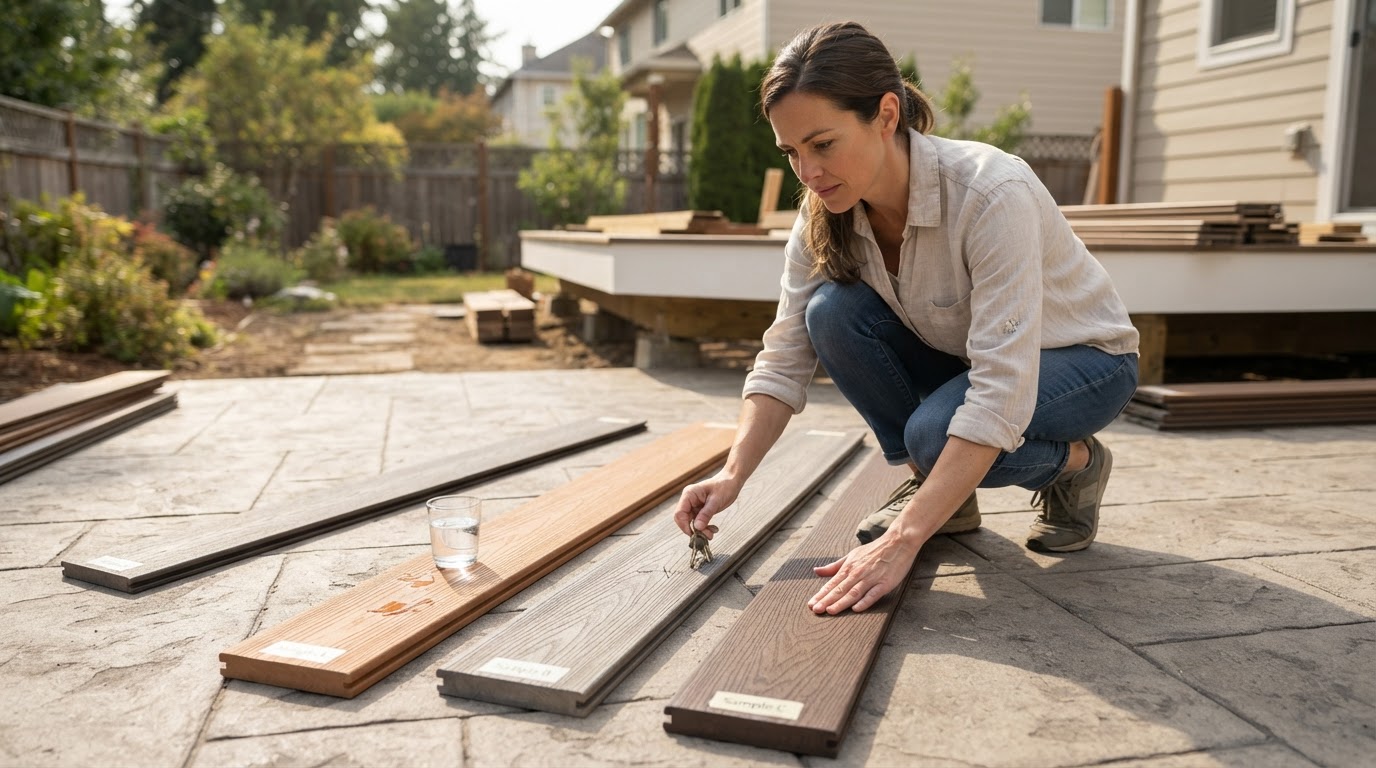
Deck Design landing featuring in-home design consultation, material samples, accessibility-conscious design options. Useful for deck design process articles.
- Measurement basis. Deck dimensions, height above grade, and the exact areas being replaced—not just a round number.
- Demolition scope. What comes out, where it goes, and who pays the disposal fees.
- Structural line items. Framing repair, footing work, ledger attachment, and joist reinforcement listed as separate allowances.
- Material specification. Decking brand and line, railing system, fasteners, stairs, fascia, and any lighting.
- Permit and inspection handling. Who files, who meets the inspector, and whether the permit fee is included.
- Warranty terms. Manufacturer coverage, workmanship coverage, and the exclusions that apply to each.
Then ask the questions that separate a firm bid from an optimistic one. What happens if the frame is worse than expected once the deck is open? Is the disposal fee capped or based on weight and trips? Can the price change if material lead times or inspections move the schedule? Which completed projects match this deck's scale, material, and height?
Deciding With Confidence
Replace when the structure is failing, repair when the frame is sound, and resurface when only the surface has reached the end of its life. Get every bid broken into the same line items, confirm who handles permits and inspections, and compare the structural allowances rather than the bottom line alone. That turns a vague range into a number you can plan around.