Composite Decking vs Wood: The Short Answer
If you want a deck you can enjoy without an annual staining and sealing routine, composite decking is usually the easier surface to own. If the lowest upfront cost and the look and feel of real wood matter most, wood is still a smart choice. Neither material wins outright: the right pick depends on how you use the space, how much maintenance you will actually do, and how each surface behaves in your local climate.
This comparison guide is published by Deck Bros, a deck builder serving the Omaha metro area.
The sections below walk through the differences that show up in daily use — upkeep, surface temperature, scratching, appearance, warranties, and cost — and end with a short framework you can work through before you commit.
What Composite Decking Is Made Of
Composite decking is a manufactured board made from a blend of wood fiber and plastic, formed into planks that imitate the look of wood. Capped products bond a polymer shell over a core board, while uncapped products leave the wood-and-plastic mix exposed. PVC decking is a related option made without wood fiber at all.
That construction explains why composite behaves differently from lumber. The plastic content resists moisture far better than untreated wood, so boards are not prone to the rot and splintering that a neglected wood deck can develop. Composite is also denser and more dimensionally stable, which changes both how it feels underfoot and how it is fastened.
Where Wood Still Comes Out Ahead
Wood decking — cedar, pressure-treated lumber, and premium hardwoods — is cut from real timber. It can be sanded and refinished, repairs blend in naturally, and the color and grain are genuinely natural rather than molded or printed.
Wood is also the material that usually stretches further on a fixed budget. If you want the largest deck your money can buy, wood generally covers more square feet than a comparable composite package at the same price point.
Lifespan and Structural Durability
The honest answer is that lifespan depends on more than the boards on top. Framing, footings, ventilation, drainage, joist spacing, fasteners, and how the deck is used all shape how long a surface lasts. A well-built wood deck that is maintained on schedule can serve for a long time, and a poorly ventilated composite deck can fail early for reasons that have nothing to do with the material.
What changes between the two is the failure mode. Wood fails through moisture: rot, warping, splintering, and insect damage. Composite fails through surface problems: grease and rust stains, fading, scratches, and occasionally a mold or mildew film that needs cleaning. Neither material is maintenance-free in a climate with real winters.
For a realistic lifespan estimate, ask about the specific product class and the condition of the framing underneath it, then read the manufacturer's own documentation for that product.
Maintenance: The Biggest Day-to-Day Difference
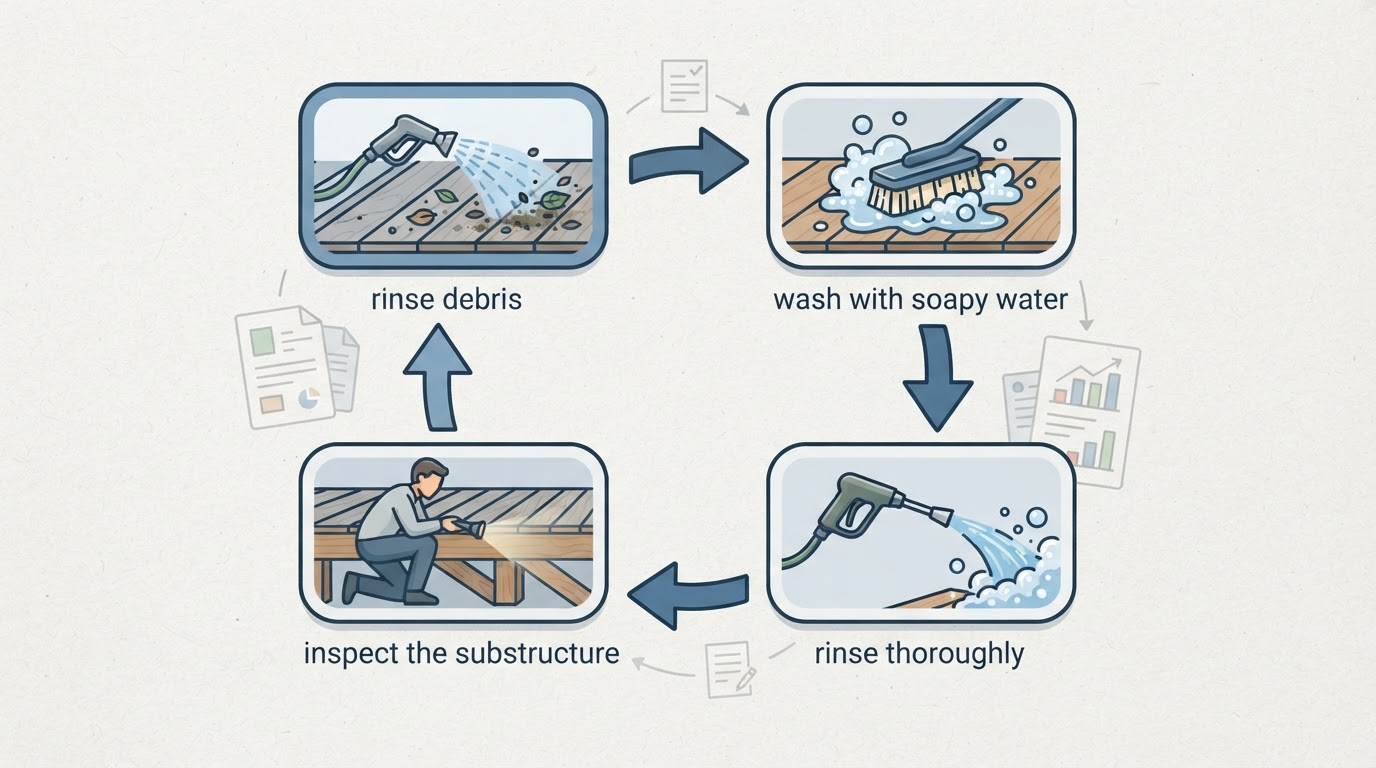
This is where composite decking earns most of its following. A composite surface is typically cleaned with soap, water, and a soft brush. There is no sanding, no staining, and no sealing cycle. Spills that would soak into wood usually sit on the surface long enough to wipe away.
Wood asks for more. Cedar and pressure-treated lumber generally need cleaning and fresh sealer or stain on a recurring schedule that depends on sun exposure, moisture, and foot traffic. Skip that work for several seasons and the deck will show it: gray boards, raised grain, and splinters along the edges. In a freeze-thaw climate the cycle repeats faster, because moisture moves in and out of the wood all winter.
If you enjoy a weekend of deck care, wood is not a burden. If you know you will not keep up with it, composite is the more forgiving choice.
Heat, Slip Resistance, and Scratches
Surface temperature is often the first difference homeowners notice. Composite boards handle heat differently from wood, and darker colors in direct afternoon sun can get uncomfortably warm underfoot. Lighter colors and different product tiers behave differently, so check the specific color and product rather than judging the whole category.

Slip resistance comes from surface texture, not from the material name. Wood and composite are both available with embossed or brushed textures that grip better when wet. A smooth wet surface of either material can be slippery.
Scratches cut the other way. Wood can be sanded and refinished, so shallow damage is repairable. Composite surface damage is harder to remove, and some capped products can only be restored within the limits the manufacturer allows. Dragged furniture, pet claws, and dropped grill lids are the usual culprits on either surface.
Appearance and How Each Surface Ages
Wood starts as the color you chose and then changes. Cedar and pressure-treated lumber weather toward gray unless they are cleaned and refinished, and the grain stays visible the whole time. Some homeowners love that natural aging; others want the color they picked on day one to stay put.
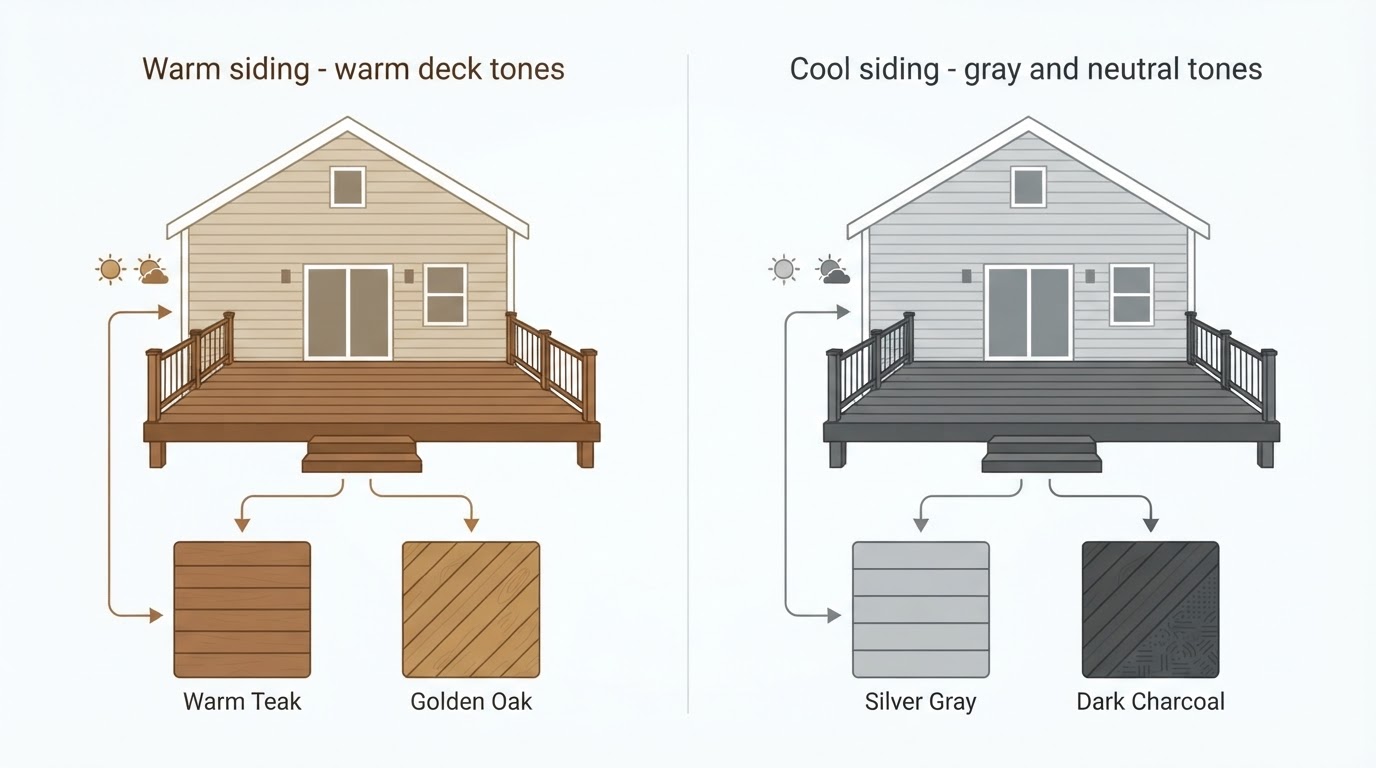
Composite decking is built for color consistency. The color runs through the board, so it does not need a new coat of stain to come back. The visual trade-off is that some products look more uniform, and at close range more manufactured, than real wood. Board lengths, grain patterns, and color blends vary by manufacturer, so samples matter.
Warranties: What They Actually Cover
Decking warranties are not one thing. A typical package can include a product warranty on the boards, a labor warranty on the installation, and sometimes an extra labor component tied to a contractor's certification level. The manufacturer covers the material; the builder covers the workmanship.
Before you compare warranty claims, get three details in writing: what is covered, how long coverage runs, and what maintenance the manufacturer requires to keep it valid. Fading, stains, and scratches are common exclusions, and so is damage caused by improper cleaning or by a framing problem underneath the surface.
Then look at the installer's workmanship warranty. Many deck problems trace back to framing, fastening, and flashing rather than to the board itself, so the labor terms matter as much as the material terms.
Cost: Upfront Price vs Lifetime Spending
Composite usually costs more per square foot than pressure-treated lumber and often more than cedar. That gap is the main reason homeowners still choose wood. The counter-argument is total spending: if a wood deck needs re-staining every few years and composite does not, part of the upfront savings comes back later as maintenance cost and weekend time.
The fair comparison is not the board price. Price out the full package — framing, footings, stairs, railing, fascia, lighting, permits, and labor — for each material at the size you actually want. Then decide how long you plan to stay in the home. Composite makes more sense over a longer horizon and when you place real value on skipping maintenance. Wood makes more sense when the lowest entry cost matters most or when you genuinely enjoy the natural look and the upkeep that comes with it.
Cedar and Pressure-Treated Lumber: The Wood Side of the Decision
Cedar is a naturally rot-resistant softwood with a warm color and visible grain, and it resists moisture well without chemical treatment.
Pressure-treated lumber is the most affordable common decking option, and it typically needs more staining and sealing than cedar to stay in good shape.
Composite manufacturers such as Trex publish product-specific warranty terms, color options, and care instructions, so the brand name alone tells you less than the specific product line does.
A Simple Decision Framework
Work through these four questions before you ask for quotes.

- How much time will I actually spend on upkeep? If the honest answer is almost none, composite deserves extra weight.
- How long will I stay in this home? A longer horizon makes the composite premium easier to justify.
- How does the deck face? An exposed, west-facing deck with dark boards will run hotter than a shaded or lighter one, whichever material you pick.
- What is under the surface? If the framing needs repair, that cost comes first and can change what the surface budget can carry.
Local Considerations for Nebraska and Western Iowa
A deck in this region lives through freeze-thaw cycles, strong summer sun, and moisture that lingers after storms. Two practical implications follow. First, drainage and ventilation under the deck matter as much as the surface choice, because trapped moisture shortens the life of the framing and the surface alike. Second, plan for the sun: decks that face west take the most afternoon heat, so surface temperature and fading deserve extra attention there.
Material choice does not remove those conditions. It only changes how you maintain the deck and how the surface ages while you do.
Seeing and Touching the Materials Before You Commit
Deck Bros offers in-home design consultations with physical material samples, so you can compare wood and composite products side by side and talk through the pros and cons of each option before deciding.

Deck Design landing featuring in-home design consultation, material samples, accessibility-conscious design options. Useful for deck design process articles.
A same-day quote after an on-site measurement makes it easier to compare real numbers, and having the builder handle the permit paperwork keeps the project moving. Samples and a site visit will tell you more about color, texture, and heat than any photograph can.
Common Questions Homeowners Ask
Does composite decking get too hot to walk on?
Dark boards in direct sun can get hot on any material. If your deck faces west and you plan to walk barefoot, favor a lighter color and check the specific product's heat behavior in person.
Is a wood deck cheaper than composite?
Usually, yes, especially with pressure-treated lumber. The gap narrows when you account for years of staining, sealing, and repairs, so compare total spending over the time you expect to stay in the home, not just the installation quote.
Can I replace just the decking and keep my existing frame?
Often you can, if the framing, footings, and flashing are sound. A contractor can assess the structure before you choose a material, which matters because composite products list their own required joist spacing in the manufacturer's installation guide.
Do I need a permit to replace a deck?
Requirements vary by city and by how much of the structure changes. Ask the contractor who will do the work, and get the permit responsibility in writing before the project starts.
The Bottom Line
Choose composite decking when low maintenance and color consistency matter more than upfront price. Choose wood when budget, natural character, and repairability matter more than upkeep. Either way, the quality of the framing and the installation will influence how long the deck lasts as much as the surface material does.
If you want to see and feel the difference before deciding, ask a local builder to bring samples to your home and walk you through the trade-offs for your specific deck.