Roommates often hope one app can keep the chore rotation visible and record who paid what and who owes whom, but those are two very different jobs. Search interest in splitting expenses and tracking chores proves demand, not that one product does both well. Test any candidate with the criteria, one-week trial and decision rule in this guide before committing.
Two jobs, one question: what an all-in-one claim has to prove
Chore coordination and shared-expense record-keeping are different kinds of work, and that difference is why the "one app" question is harder than it sounds. Chores are recurring assignments: a task, an owner, a due date, a visible completion. A shared-expense record is a ledger: an entry, the people who share it, a split rule, a running balance, and a history of settlements. A schedule and a ledger have different shapes, run on different rhythms (weekly review for chores, monthly settle for money), and need different permissions.
So when an app calls itself all-in-one for roommates, treat the claim as two separate promises that each need testing. An app with a lovely chore chart can have a weak split engine, and a polished expense splitter may treat chores as an afterthought. That is also why this article deliberately avoids a best-app ranking: search results can tell you that people want one tool for splitting chores and tracking shared expenses with roommates, but only your own criteria, applied to a specific app's documentation, can tell you whether the combination exists for your household.
Decide first: what is shared, and what stays private
Before judging any app, agree on the boundary between shared and private. Without that agreement, every later decision about permissions and features has no anchor.
Shared: the chores themselves, the rotation, and the standard for "done"; recurring household costs such as rent, utilities and internet; shared groceries and cleaning supplies; receipts that other members must be able to verify; and household events that affect everyone, such as a cleaner visit or a guest staying over.
Private: bank logins and passwords (no chore-and-expense record needs them), personal subscriptions and purchases that are not household costs, your own task lists, and anything medical or personal. Sharing a flat does not mean sharing a to-do list for your own projects, and it certainly does not mean sharing financial accounts.
Also decide who is in which group. All three flatmates may share the chore rotation, but only two share a streaming subscription, and only the people who ate the takeout share that entry. If your household regularly splits into subsets, write that down now, because it is the single most common reason a combined app fails the trial in the second week.
Chore criteria: ownership, rotation, frequency, completion, review
Use these five criteria to test the chore side of any candidate app.
Ownership. Every chore has a named owner, not a vague "everyone". Even genuinely joint chores need a lead who confirms completion.
Rotation. Weekly swaps need a deterministic pattern, such as kitchen A-to-B-to-C, that repeats. Check whether the app can schedule alternating owners or makes re-assigning simple enough that the weekly handover takes ten seconds instead of a negotiation.
Frequency. Chores recur on different cycles: kitchen daily-ish, bathroom weekly, fridge clean-out monthly. The app must handle repeating tasks with due dates and show what is due next, so the rotation does not depend on anyone's memory.
Completion. Checking off a chore must be visible to the whole group, with the task owner doing the check. Agree on the standard in advance — "kitchen clean" means counters wiped, sink empty, floor swept — because a checklist only works when everyone shares the definition of done.
Review. Plan a ten-minute weekly review where the group opens the record and goes through what finished, what did not, and why. The app shows the facts; the review is where the schedule gets fixed before resentment builds. The completion standard for the week is simple: every chore has an owner, a due date and a status, and nothing silently disappeared.
Expense criteria: participants, categories, split methods, balances, corrections, settlement records
The expense side needs its own test, and this is where most all-in-one apps reveal their limits.
Participants. Each entry must let you pick who shares it. If the app only splits everything equally among the whole group, a flat with subsets will fight the tool every week.
Categories. Bills, groceries, supplies and shared outings are enough to start. Categories make the monthly review possible; check that they are editable.
Split methods. Test three deterministic patterns, because they cover most flatshares:
- Equal shares — rent of 1,800 split three ways is 600 each. This is the default for costs everyone consumes equally.
- Fixed shares — a pre-agreed unequal split, such as 60/40 on utilities because the rooms differ in size. A 140 gas bill becomes 84 and 56.
- Participant-specific costs — an entry charged only to the people it belongs to: a 45 takeout order among the three who ate it is 15 each, and a guest pays their share of that entry but nothing else.
Balances. The app should maintain a running who-owes-whom balance automatically, and the number must be explainable. Verify it once a week by recomputing a single recent entry by hand; if you cannot reproduce the balance, the record is not trustworthy.
Corrections. Wrong entries happen. The app must allow edits and deletions with a note attached, not silent removal, because silent deletions are how expense disputes start.
Settlement records. When someone actually transfers money to settle, that payment should be logged against the balance and kept in the history. The record then shows both sides of the story: the balance that built up and the settlement that cleared it.
One boundary matters throughout: these split methods are record-keeping conventions, not financial advice. For debt, tax or other money questions, consult the relevant professional or authority in your country.
A balance is a record, not a payment
Tracking a balance is not the same as paying a bill or transferring money, and keeping that distinction clear prevents most misunderstandings with a new tool. The app records who owes what at a moment in time; unless the app's own documentation says it moves money, it does not. When a bill is due, one flatmate pays it from their own account and logs the entry, and the balance records who owes them what share.
Expect nothing more from the record than a record. No app guarantees fairness, prevents disputes or avoids fees, and any product that promises those outcomes is overselling. What a good record actually buys you is a shared reference: when a turn or a payment is questioned, the group looks at the same history instead of arguing from memory. Keep bank details out of the app entirely — record-keeping never requires them.
Requirements matrix: score any candidate before you commit
Print or copy this matrix for each app you are considering, and fill it in from the app's own help pages and a hands-on trial, not from screenshots.
Job | Check this | Pass / Fail / Unsure |
|---|---|---|
Chores | Named owner per task |
|
Chores | Rotation with alternating owners |
|
Chores | Recurring due dates visible to all |
|
Chores | Completion checked off by the owner, visible to all |
|
Expenses | Participants chosen per entry |
|
Expenses | Equal, fixed and participant-specific splits |
|
Expenses | Editable categories |
|
Expenses | Running balance you can reproduce by hand |
|
Expenses | Corrections with a note, not silent deletes |
|
Expenses | Settlement log that clears balances |
|
Shared | Flatmates can be invited (check the documented group model) |
|
Shared | Roles and permissions for add, edit, delete |
|
Shared | Privacy policy you can read; data export available |
|
Shared | Runs on every member's platform |
|
Shared | Price model you accept, with no paywall on features you need |
|
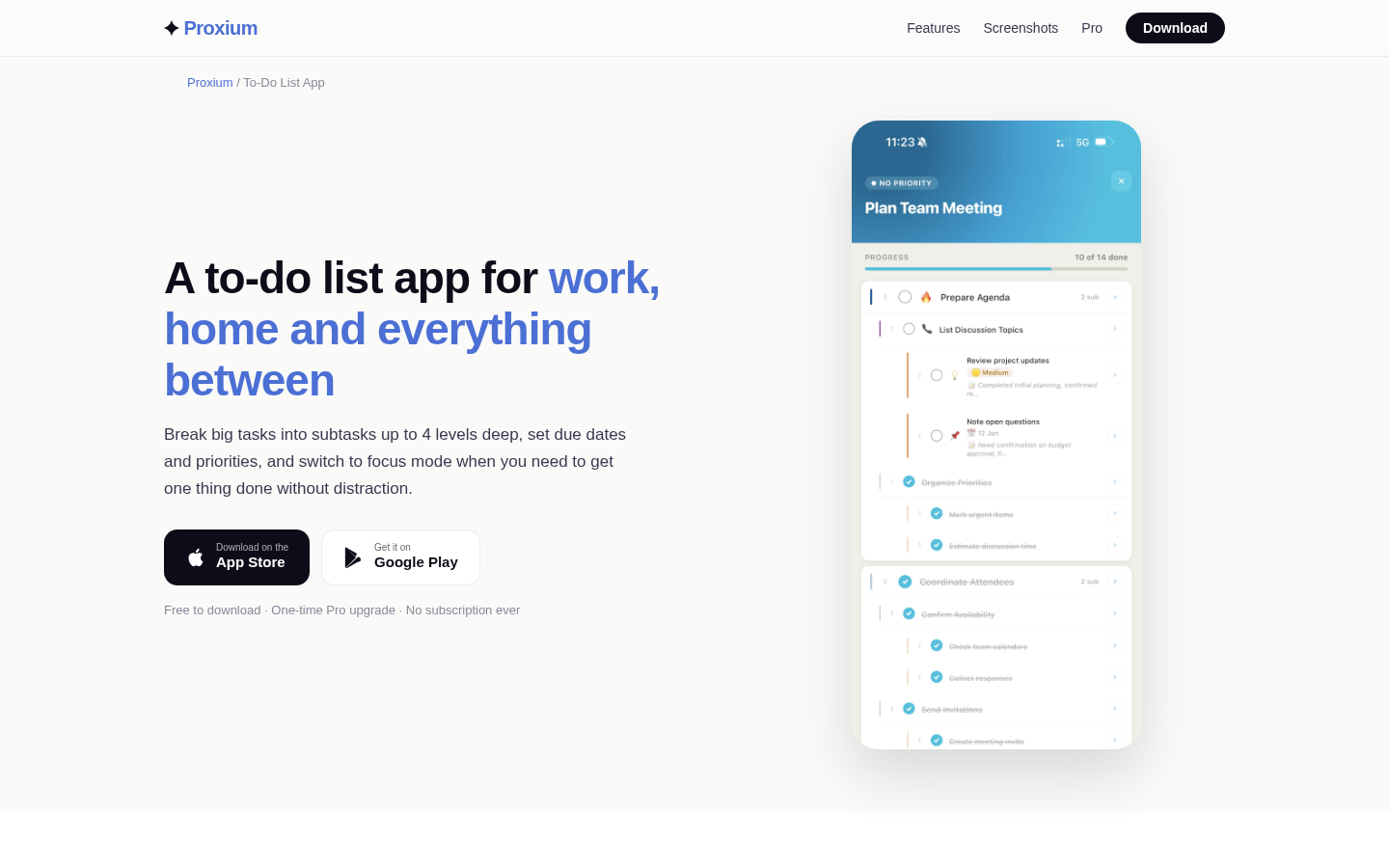
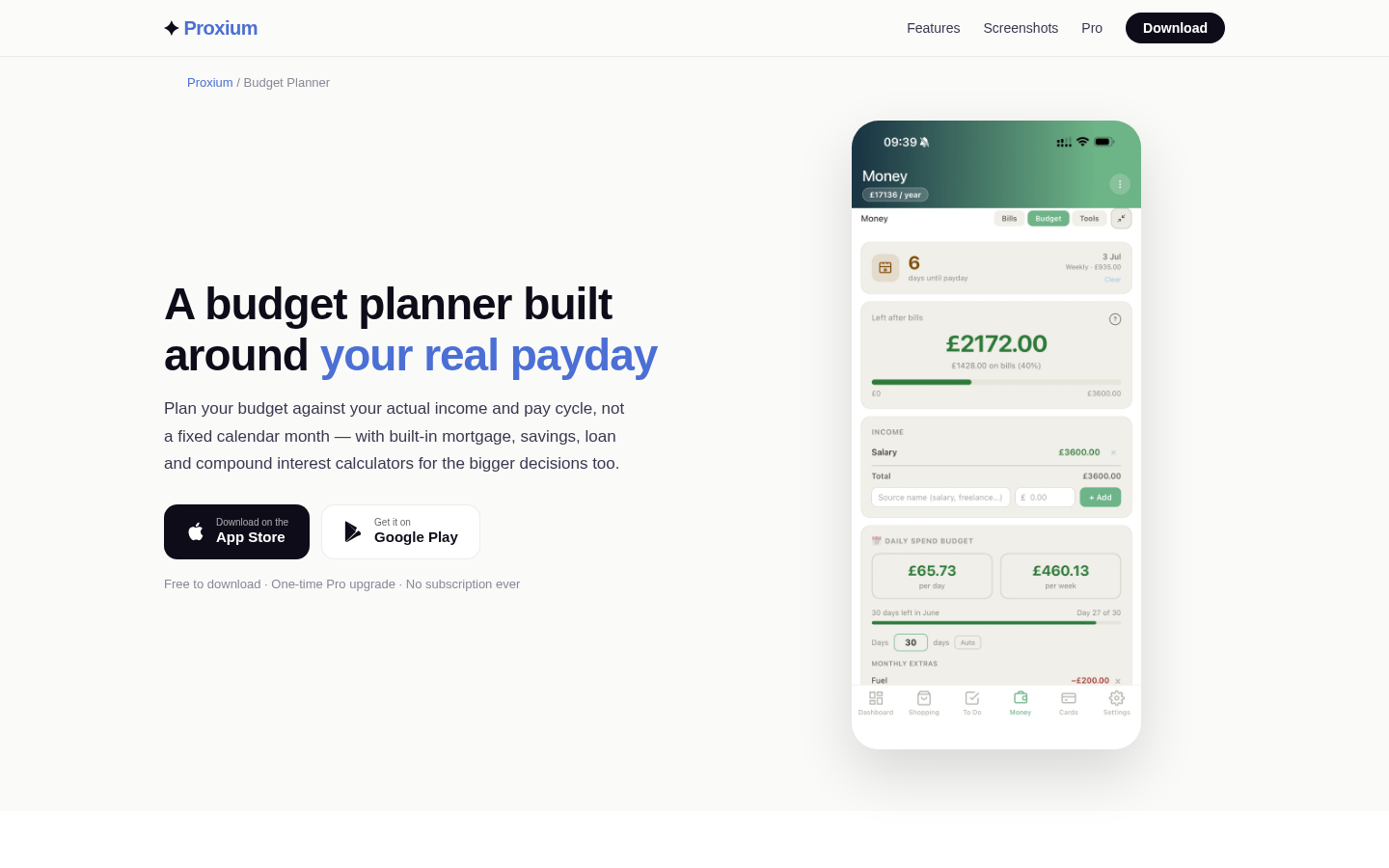
Then verify, because marketing pages generalize. Here is what a documentation check looks like on a real all-in-one household organiser: Proxium's published pages document real-time sharing of a shopping list and a family calendar on one shared group, with a badge showing who added each event. Its to-do list and bill tracker pages describe personal lists that sync across your own devices, and they do not describe a flatmate chore roster or a per-person expense split. On the matrix above that scores: shared calendar and list pass; chore rotation and split ledger not documented — which means a flatshare wanting both jobs in one place should keep looking or pair it with dedicated tools. Run the same check on every candidate, including the one already sitting on your home screen.
Household rules that keep the record honest
An app is only as good as the rules around it. Agree these four in the first week:
- Receipts. Any shared purchase over a small threshold, say 20, gets entered with a receipt photo within 48 hours, by whoever paid.
- Disputed entries. Nobody deletes a contested entry. Flag it, leave it visible, and settle it at the weekly review.
- Reimbursements. Settle once a month by bank transfer between the people involved, then log the settlement in the app so the balance starts clean.
- Recurring costs. When a recurring bill changes, update the entry that month and check its category and split rule, so the pattern stays true.
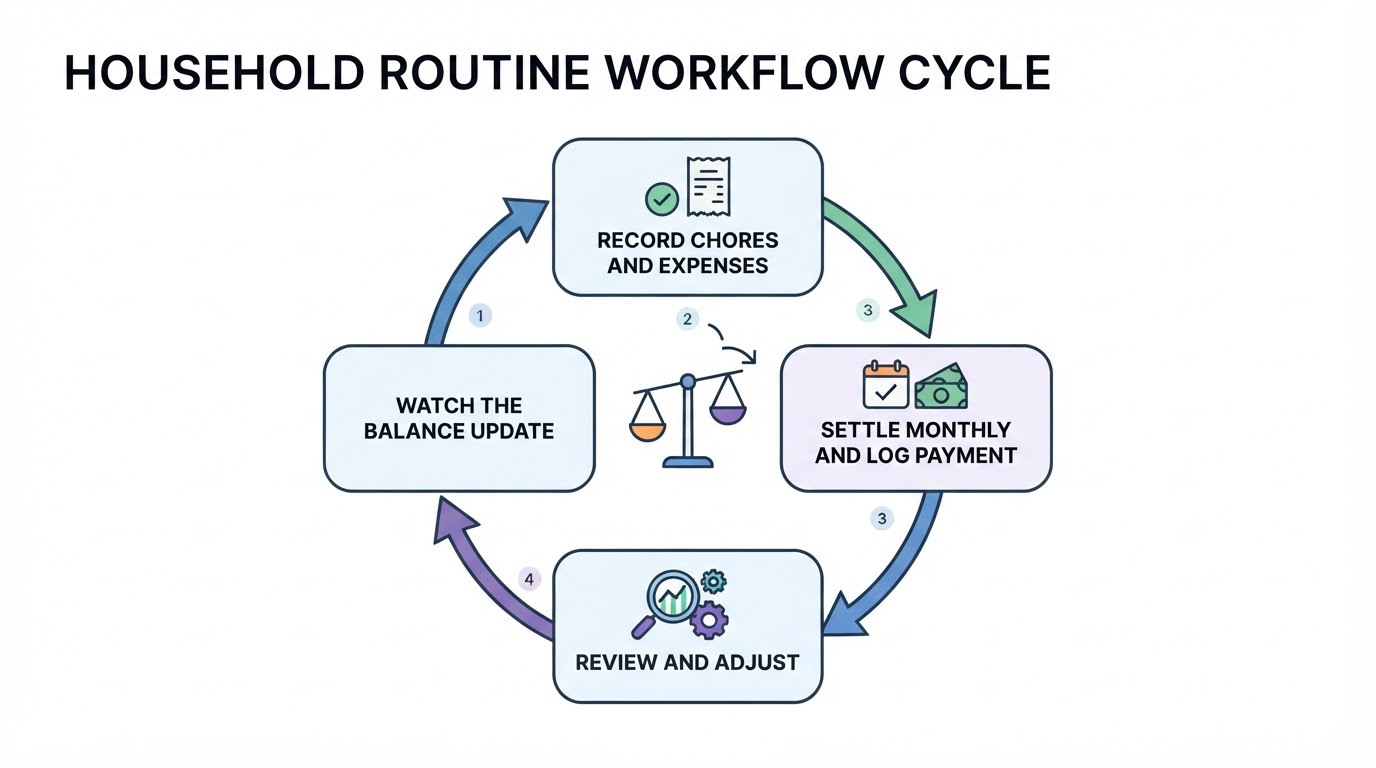
Once a week, sit down for ten minutes, open the record and review what finished, what did not and why. Money gets the same treatment monthly: read the balance, confirm every member agrees with it, settle, and log the settlement.

Run a one-week trial with real but low-risk data
A trial protects everyone from committing to a tool that looks good in a demo and dies in real use. Set aside one week and use the candidate app for a small, real slice of household life:
- Create the group and invite everyone who shares the chores.
- Add three real chores with a rotation — kitchen, bathroom and trash are enough — and agree the standard for each.
- Add two recurring shared costs, such as the internet bill and one shared grocery category.
- Enter every shared receipt as it happens, with the participant and split rule.
- Settle one small amount for real — a bank transfer of pocket-money size — and log it.
- Do the weekly review and the end-of-week check together.
The trial passes only if every chore was completed and checked by its owner, every shared purchase was entered within a day, the app's balance matched a hand calculation, the settlement logged correctly, and nobody needed a second tool to do any of it. Friction notes are data, not failure: write down what annoyed each person, because annoyance in week one becomes abandonment in month two.
One app or two: decide after the trial, not before
Keep one all-in-one app when the same people share both jobs, the split rules and permissions cover how you actually live, and the trial week passed without anyone working around the tool. In that case one app genuinely reduces the number of places the household has to look.
Choose separate chore and expense tools when the group splits into subsets often, when the combined app documents only part of the job (as the matrix check above shows is common), when any member is uncomfortable keeping a shared finance record, or when household members change frequently and each newcomer would need a fresh group setup. Two dedicated tools mean two places to check, but a clear division of labour usually outlives a crowded app that nobody fully trusts. The honest rule: a well-run two-tool setup beats an abandoned all-in-one, and the cost of a wrong choice is a few evenings of re-entering data — which is exactly why the trial comes first.
Roommate setup checklist and next steps
Print this and bring it to the first household meeting:
- Both jobs defined: chore coordination and shared-expense records
- Shared vs. private list agreed, including bank details staying out
- Group membership written down, including who is in which subset
- Chore set, rotation pattern and "done" standard agreed
- Split methods chosen: equal, fixed, participant-specific
- Rule set: who pays which bill, receipt threshold, dispute handling
- Settlement cadence fixed (monthly) and logged in the app
- Permissions set for add, edit and delete
- Trial week dates booked, review time scheduled
- Move-out rule agreed: final settle and record export within 30 days
Then the next steps are deliberately small. Run the trial week, hold the review, adjust the rules once, and decide with the full group. If the combined app passes, one place for chores and shared expenses is genuinely possible; if it does not, two honest tools will serve the flat better than one overpromising app. Start small, record consistently, and let a real week of use — not a feature list — make the call.